Furnishing a bedroom from scratch can drain a bank account fast. A new bed frame, dresser, and nightstand can easily run $2,000 or more, before adding a mattress. Used bedroom furniture offers a practical alternative that saves money without sacrificing quality or style. Solid wood pieces from decades past often outlast today’s particleboard equivalents, and many come with character that new furniture lacks. With a bit of inspection know-how and some elbow grease, buyers can score durable, attractive bedroom furniture for a fraction of retail prices.
Table of Contents
ToggleKey Takeaways
- Used bedroom furniture saves 50–75% compared to new retail prices while often featuring superior solid wood construction that outlasts modern particleboard alternatives.
- Inspect joints, drawer glides, hardware, and check for odors or pest damage before purchasing; dovetail joinery and smooth metal glides indicate quality builds.
- Facebook Marketplace, estate sales, and Habitat for Humanity ReStores offer the best selection of used bedroom furniture, with estate sales providing the highest-quality vintage pieces.
- Basic refinishing techniques like cleaning, painting with bonding primer, staining, and hardware replacement transform dated used furniture into custom pieces matching any décor.
- Buying used bedroom furniture reduces environmental impact by keeping functional pieces out of landfills and eliminating manufacturing waste.
- Measure doorways and staircase clearances, ask about provenance, and save searches on multiple platforms to find quality pieces before fast-moving listings sell out.
Why Choose Used Bedroom Furniture?
The math alone makes a strong case. A solid wood dresser that retailed for $1,200 fifteen years ago often sells for $150–$300 secondhand. That same quality construction in a new piece would cost significantly more today, assuming it’s available at all.
Older bedroom furniture frequently uses better materials. Pre-1990s pieces often feature dovetail joinery, real wood drawer boxes, and solid hardwood frames. Modern budget furniture relies on particle board, laminate veneers, and stapled corners that fail within a few years. A used dresser with dovetail drawers will outlast a new one with glued particleboard every time.
Environmental impact matters too. Manufacturing new furniture consumes lumber, energy, and chemicals for finishes. Buying used keeps functional pieces out of landfills and reduces demand for new production. It’s not hippie theory, it’s practical resource management.
Style flexibility is another advantage. Used furniture can be refinished, painted, or modified to match any décor. That dated oak finish can become sleek gray, farmhouse white, or natural wood with fresh stain. Customization options beat the limited finishes offered by big-box retailers.
Where to Find Quality Used Bedroom Furniture
Online Marketplaces and Local Listings
Facebook Marketplace and Craigslist dominate the local used furniture game. Facebook has the edge with user profiles (reducing scam risk) and integrated messaging. Search within a 25–50 mile radius for the best selection, and check listings daily, quality pieces move fast.
Filter searches by material and era. Terms like “solid wood,” “mid-century,” “vintage,” or specific brands (Ethan Allen, Thomasville, Drexel Heritage) help surface better-built furniture. Avoid listings with vague descriptions like “nice dresser”, sellers who know quality furniture usually mention construction details.
OfferUp and Nextdoor are also worth monitoring. Nextdoor listings tend to come from neighbors unloading furniture during moves, often priced to sell quickly rather than maximize profit. Estate liquidators sometimes post entire bedroom sets there.
Set up saved searches and alerts. Most platforms let users save search terms and receive notifications when new listings match. This beats manually scrolling through hundreds of irrelevant posts.
Thrift Stores, Estate Sales, and Consignment Shops
Habitat for Humanity ReStores carry donated furniture at nonprofit pricing. Selection varies wildly by location and timing, but these stores often get solid wood bedroom furniture from downsizing homeowners. Prices typically run 50–75% below private sales.
Estate sales offer the best odds for high-quality vintage furniture. Professional estate sale companies photograph and price items before the sale. Arrive early on the first day for best selection, or wait until the final hours of the last day when everything drops to half-price. Bring cash, many estate sales don’t accept cards.
Consignment shops curate better-condition pieces and handle the transaction, but charge accordingly. Expect to pay 30–40% more than buying directly from a seller. The trade-off is quality control and some level of return policy, which private sales rarely offer. Many of these shops also feature furniture selection approaches that prioritize timeless design.
Auction houses and storage unit auctions are hit-or-miss. Auctions work well for buyers who know furniture values and can spot quality from across a room. Storage auctions are gambles, most furniture sat in uncontrolled climates and may have pest or moisture damage.
How to Inspect and Evaluate Used Bedroom Pieces
Start with the frame and joinery. Open drawers and check how they’re assembled. Dovetail joints (interlocking fingers of wood) indicate quality construction. Staples, glue, or nails alone signal cheaper builds that won’t last. Rock the piece side-to-side, excessive wobble means loose joints or structural damage.
Inspect drawer glides and slides. Wooden drawer guides should slide smoothly without binding. Metal glides should be intact with no missing ball bearings or bent tracks. Replacing drawer slides costs $20–$40 per drawer plus installation time.
Examine all surfaces for damage. Surface scratches and worn finish are cosmetic, easily fixed with sanding and refinishing. Water damage, deep gouges, and veneer delamination are harder to repair. Press on veneered surfaces: if they give or feel spongy, the substrate is damaged.
Check for odors and pests. Sniff inside drawers and cabinets. Musty smells indicate moisture exposure and possible mold. Tiny holes or sawdust-like residue signal active wood-boring beetles. Walk away from infested furniture, it’s not worth bringing pests home.
Test all hardware and mechanisms. Open and close every drawer and door. Check that hinges work and catches engage properly. Missing or broken hardware can be replaced, but factor that cost and effort into your offer. Specialty hardware for vintage pieces may require online ordering.
Bring basic measuring tools. A tape measure confirms the piece fits the intended space, and check doorways and staircases if moving it yourself. A level (or smartphone level app) helps assess if the piece sits flat or has warped.
Ask about provenance when possible. Knowing whether furniture came from a smoke-free home, climate-controlled storage, or a damp basement helps assess condition. Sellers motivated by moving deadlines often negotiate more than those casually decluttering.
Refreshing and Customizing Your Used Furniture
Cleaning comes first. Wipe down all surfaces with a mild soap solution (dish soap works) and let dry completely. For stubborn grime, Murphy Oil Soap cuts through decades of buildup without damaging wood. Vacuum drawer interiors and use a disinfectant spray inside enclosed cabinets.
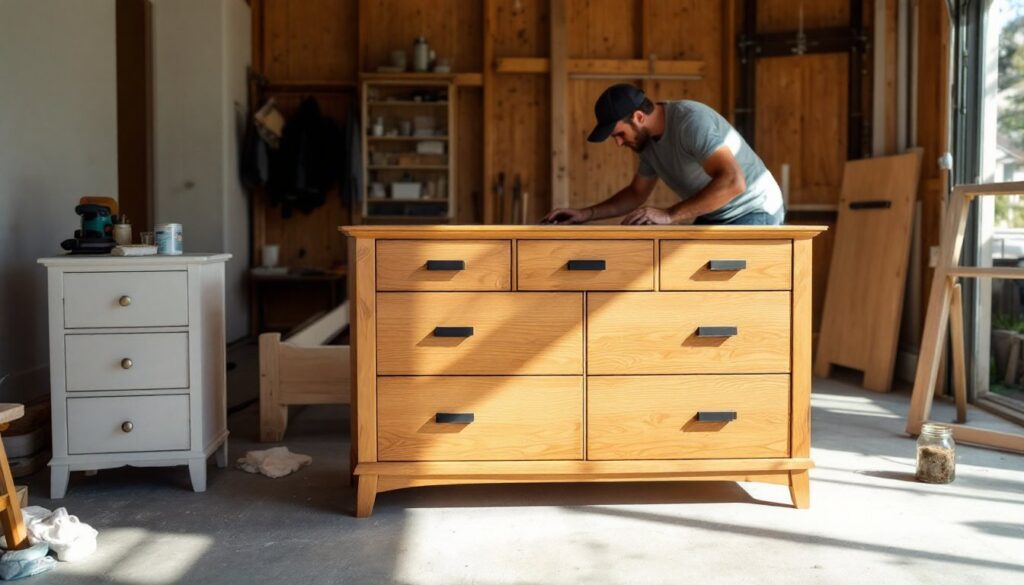
Stripping and refinishing transforms outdated finishes into custom looks. Chemical strippers like Citristrip remove old varnish, lacquer, or paint without harsh fumes. Work outdoors or in a well-ventilated garage. Wear nitrile gloves and eye protection, strippers cause chemical burns.
After stripping, sand with 120-grit sandpaper to smooth the surface, then 220-grit for a final pass. An orbital sander speeds the job, but hand-sanding works for smaller pieces. Always sand with the grain to avoid cross-grain scratches.
For painted finishes, skip the stripper if the existing finish is sound. Clean thoroughly, then apply a bonding primer like Zinsser B-I-N or KILZ Adhesion. These primers stick to glossy surfaces without sanding. Two coats of quality paint (Benjamin Moore Advance or Sherwin-Williams Emerald) provide durable coverage. A small foam roller gives smooth results on flat surfaces: use a brush for details.
Staining works only on bare wood. Apply wood conditioner first if working with softwoods like pine, it prevents blotchy absorption. Use gel stain for the most control and even color. Apply with a rag, let sit for the recommended time, then wipe off excess. Seal with polyurethane (oil-based for durability, water-based for low odor).
Many furniture refinishing projects and creative furniture transformations show how paint, new hardware, and simple modifications turn dated pieces into custom focal points.
Hardware replacement instantly updates furniture. Swap brass pulls for modern matte black, or replace basic knobs with ceramic or leather pulls. Drill holes may not match new hardware spacing, fill old holes with wood filler, sand smooth, and drill new holes using a template for accuracy.
Structural repairs should be addressed before refinishing. Re-glue loose joints with wood glue (Titebond II or III) and clamp for 24 hours. Replace broken drawer bottoms with 1/4-inch plywood cut to fit. Reinforce wobbly frames with corner braces or additional glue blocks.
Don’t overlook drawer liners. Peel out old contact paper and either install fresh non-adhesive liner (easier to replace later) or paint the interior with leftover wall paint for a clean, modern look.
Conclusion
Used bedroom furniture delivers real value when buyers know what to look for. Quality construction, honest assessment of condition, and willingness to put in some refinishing work turn secondhand pieces into bedroom staples that outlast and outperform budget retail furniture. Whether hunting for mid-century gems or simply furnishing a space affordably, the used market offers options that make financial and environmental sense.