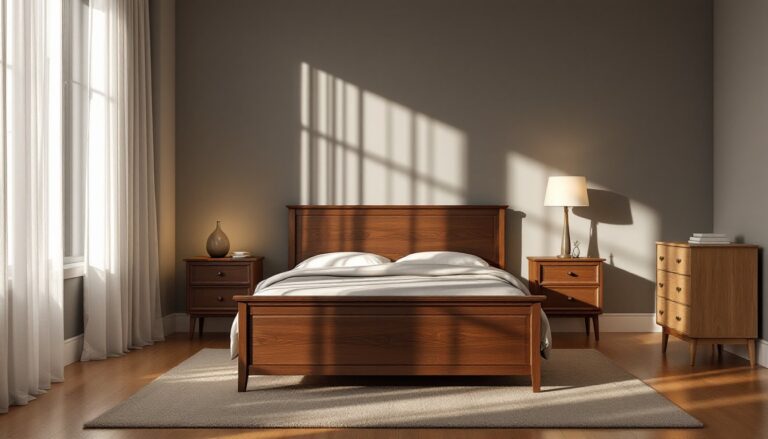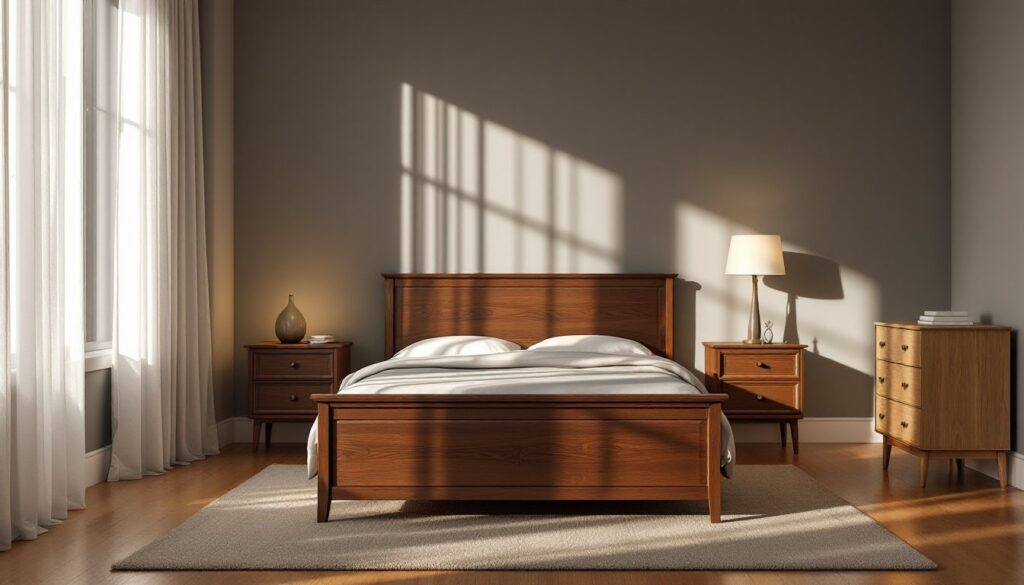
Solid wood bedroom furniture represents one of the best long-term investments a homeowner can make. Unlike particleboard or MDF alternatives, genuine hardwood pieces can last decades, sometimes generations, when properly maintained. Real wood brings warmth, character, and structural integrity that engineered materials simply can’t match. Whether building from scratch or shopping for a complete set, understanding wood species, joinery methods, and finish options will help make informed decisions that balance budget with longevity.
Table of Contents
ToggleKey Takeaways
- Solid wood bedroom furniture outlasts engineered alternatives by decades due to superior durability, repairability, and structural integrity that particleboard and MDF cannot match.
- Oak, walnut, and cherry are the best wood species for bedroom furniture, each offering distinct advantages: oak combines durability and classic style at moderate cost, walnut brings premium richness, and cherry delivers elegant character while remaining easier to work with.
- Quality solid wood furniture requires mortise-and-tenon joinery, dovetailed drawer construction, and finished interior surfaces—details that indicate longevity and justify the 3–4x higher upfront investment.
- Proper maintenance at 30–50% humidity with regular dusting, minimal water exposure, and appropriate finish care extends solid wood bedroom sets from 20–50+ years into multi-generational heirlooms.
- Solid wood bed frames and case goods provide superior structural support and resale value, while hybrid construction combining solid wood surfaces with quality plywood cores offers a practical balance for budget-conscious buyers.
Why Solid Wood Furniture Transforms Your Bedroom
The difference between solid wood and veneered or laminated furniture becomes obvious the moment you handle it. Solid wood construction means every visible surface, and most hidden ones, consists of real lumber, not a thin decorative layer glued over fiberboard.
Weight tells the first part of the story. A solid oak dresser will feel substantially heavier than a comparable particleboard unit, and that mass translates to stability. Drawers glide smoothly without the cabinet racking or twisting. Bed frames don’t creak or shift when mortise-and-tenon joints hold the rails to the posts.
Grain patterns create visual depth that synthetic materials can’t replicate. Even two pieces cut from the same tree will show unique figuring, knots, and color variation. This individuality means your bedroom set won’t look identical to anyone else’s.
Repairability sets solid wood apart for the long haul. Scratches can be sanded out and refinished. Loose joints can be reglued and clamped. A solid hardwood nightstand damaged by water might need refinishing, but the structure remains sound. Try that with particleboard, it swells, crumbles, and rarely survives moisture exposure.
Environmental considerations matter, too. Responsibly harvested hardwood from certified forests represents a renewable resource. At end-of-life, solid wood furniture can be repurposed, refinished, or safely composted, unlike composite materials bonded with formaldehyde-based adhesives.
Best Types of Solid Wood for Bedroom Furniture
Choosing the right wood species affects durability, appearance, workability, and cost. Hardwoods dominate bedroom furniture because they resist dents and wear better than softwoods like pine or fir.
Oak: Durability Meets Classic Beauty
Red oak and white oak have anchored American furniture making for centuries. Both offer exceptional hardness (white oak rates around 1360 on the Janka scale, red oak about 1290), making them highly resistant to dents from dropped items or daily wear.
The open grain structure of oak creates prominent ray fleck patterns, especially in quarter-sawn boards. This distinctive figuring works beautifully with both traditional and craftsman-style bedroom sets. White oak’s tight cell structure makes it more water-resistant than red oak, though both accept stain readily and can be finished from light natural tones to deep espresso.
Workability matters for DIYers building their own pieces. Oak machines cleanly but can be tough on tools due to its density. Pre-drill all screw holes to prevent splitting. Woodworking project plans often specify oak for bed frames and case goods because it holds joinery well, dovetails, mortise-and-tenon, and dowel joints all perform reliably in oak.
Cost runs moderate compared to exotic hardwoods. Expect to pay $6–12 per board foot for kiln-dried oak at specialty lumber yards, though prices fluctuate with regional availability and market conditions.
Walnut and Cherry: Rich Tones for Elegant Spaces
Black walnut brings deep chocolate-brown heartwood with occasional purple or gray streaks. Its fine, straight grain and medium density (around 1010 Janka) make it a pleasure to work with, clean cuts, smooth sanding, and excellent joinery performance. Walnut naturally resists warping and checks less than many hardwoods during seasonal humidity changes.
The rich color needs minimal finishing. Many woodworkers apply only clear oil or lacquer to preserve the natural tone. Walnut does fade slightly with UV exposure, shifting toward a lighter honey-brown over years, but most consider this patina desirable.
Pricing reflects its premium status: $10–18 per board foot for domestic black walnut. Supply comes primarily from the eastern United States, where sustainable forestry practices keep it available but not cheap.
Cherry (typically American black cherry) starts life with pinkish-tan sapwood and reddish-brown heartwood, then darkens significantly over time to a rich reddish-brown. This aging process happens naturally with light exposure and is one of cherry’s defining characteristics.
At 995 Janka, cherry is slightly softer than oak but still durable enough for bedroom furniture that won’t see heavy abuse. Its fine, tight grain accepts stain unevenly, so most builders prefer clear finishes that showcase the natural color and allow the patina to develop. DIY furniture building guides frequently recommend cherry for bedroom projects because it’s easier to work than oak while delivering comparable longevity.
Expect $7–14 per board foot, depending on grade and width. Wider boards command premium prices, and character grade with more knots and color variation costs less than clear select.
How to Choose the Right Solid Wood Bedroom Set
Shopping for solid wood furniture requires attention to construction details that aren’t immediately obvious on the showroom floor. Start by inspecting joinery methods. Quality pieces use mortise-and-tenon joints for bed frame rails, dovetail joints for drawer boxes, and doweled or biscuit joints for case assembly. Butt joints held only with screws or staples indicate lower quality regardless of the wood species.
Check drawer construction carefully. Solid wood drawer boxes should have dovetailed corners (visible interlocking fingers at each corner) and a plywood or solid wood bottom set in a dado groove, not stapled to the bottom edge. Ball-bearing full-extension slides add cost but provide decades of smooth operation.
Finish quality matters as much as wood selection. Run your hand across flat surfaces, they should feel smooth without visible brush marks or thin spots. Examine inside surfaces, too. Quality manufacturers finish interior surfaces to prevent moisture absorption, though the level of finish may be less refined than exterior surfaces.
Measure twice before buying. Nominal bed sizes (twin, full, queen, king) correspond to specific mattress dimensions, but bed frames may add several inches on each side. A king bed frame might measure 80 inches wide versus a 76-inch mattress, requiring adequate clearance from walls and other furniture. Allow at least 24–30 inches of walkway space on each side of the bed for comfortable movement.
For DIYers considering building their own, free plans for a solid wood bed offer templates for all standard mattress sizes. Building from scratch requires a table saw or circular saw, drill, and basic joinery skills, but can save 40–60% compared to retail prices for comparable quality.
Consider wood movement when selecting bedroom furniture. All solid wood expands and contracts with seasonal humidity changes. Panel construction for headboards and large flat surfaces should use frame-and-panel design that allows the wood to move without cracking. Solid slabs glued edge-to-edge will eventually develop cracks or splits unless the climate is carefully controlled.
Weight and assembly requirements deserve attention. A solid wood bed frame can weigh 150–300 pounds depending on species and design. Factor in whether upper-floor delivery is feasible and whether the piece will fit through doorways and stairwells. Some designs break down for moving: others are assembled once and stay put.
Caring for Your Solid Wood Bedroom Furniture
Proper maintenance extends the life of solid wood furniture from decades to generations. Start with climate control. Wood performs best at 30–50% relative humidity. Below 30%, wood can shrink and crack: above 50%, joints may loosen and mold becomes a risk. A simple hygrometer ($10–20) monitors conditions, and a humidifier or dehumidifier corrects extremes.
Dust regularly with a microfiber cloth, airborne particles act like fine sandpaper and dull finishes over time. Avoid feather dusters that just redistribute dust. For routine cleaning, use a slightly damp (not wet) cloth with plain water or a pH-neutral wood cleaner. Dry immediately to prevent water spots.
Wax or polish? The answer depends on the finish. Oil-finished wood (Danish oil, tung oil, linseed oil) benefits from periodic reapplication, once or twice yearly, or when water stops beading on the surface. Apply thin coats, let penetrate for 15–20 minutes, then wipe off excess. Polyurethane, lacquer, or conversion varnish finishes need only occasional cleaning: waxing serves no purpose and can create buildup.
Scratches happen. Minor surface scratches often disappear with a light buffing using 0000 steel wool dipped in mineral spirits (for oil finishes) or a furniture touch-up marker matched to the wood tone (for film finishes). Deeper scratches that penetrate to bare wood require sanding and refinishing that section.
Prevent damage before it starts. Use coasters for drinks, even brief water contact can leave white rings in some finishes. Felt pads under lamps and decor items prevent scratches from shifting objects. Keep furniture away from direct sunlight and heating vents: UV exposure fades wood, and heat accelerates moisture loss.
Refinishing solid wood furniture is straightforward when needed. Strip old finish with chemical stripper or careful sanding, starting with 80-grit sandpaper for paint removal and progressing through 120, 150, and 220 grits for smoothness. Always sand with the grain, never across it. Apply new finish according to product directions, oil finishes need multiple thin coats with drying time between, while polyurethane typically requires 2–3 coats with light sanding between applications.
Safety note: Work in a well-ventilated area when applying finishes. Wear nitrile gloves and a respirator rated for organic vapors, not just a dust mask. Oil-soaked rags can spontaneously combust, spread them flat to dry outdoors or submerge in water in a sealed metal container before disposal.
Solid Wood vs. Engineered Wood: Making the Investment Decision
The choice between solid wood and engineered alternatives (plywood, MDF, particleboard) often comes down to budget, longevity expectations, and aesthetic priorities. Neither option is universally better, context matters.
Solid wood costs significantly more upfront. A queen bed frame in solid oak might run $800–2000, while a similar-looking veneered particleboard version sells for $200–500. That 3–4x price difference buys tangible benefits: longer lifespan (20–50+ years versus 5–15 years), repairability, and resale value. Quality solid wood furniture can be sold used for 30–50% of original cost: particleboard furniture has almost no secondary market.
Structural applications favor solid wood. Bed frames, especially, benefit from the strength and joint-holding ability of hardwood. A 2×6 solid oak rail (actual dimensions 1.5″ × 5.5″) can support mattress and occupants without sagging, while particleboard rails often require metal reinforcement brackets.
Engineered wood excels in dimensional stability. Plywood doesn’t expand and contract with humidity changes like solid wood, making it ideal for drawer bottoms and cabinet backs. High-quality cabinet-grade plywood (3/4″ thick with hardwood veneer face) provides a stable substrate for veneer work that rivals solid wood appearance at lower cost.
Hybrid construction offers a practical middle ground. Many quality manufacturers use solid wood for face frames, legs, drawer fronts, and visible surfaces, while employing plywood for structural panels and drawer boxes. This approach balances cost, performance, and appearance.
Veneer deserves more respect than it gets. Thin wood veneer over plywood substrate isn’t “fake wood”, it’s real wood optimally deployed. Veneer allows beautiful, rare wood species to cover more surface area from limited resources. A single walnut log might yield enough veneer for fifty furniture pieces but solid stock for only five. The environmental argument favors veneer when done properly.
What constitutes “done properly”? Thick veneer (at least 1/32″ or thicker) on quality plywood substrate can be refinished once or twice. Cheap paper-thin veneer over particleboard can’t handle moisture, peels at edges, and fails catastrophically when damaged.
Make decisions based on use case. For heirloom-quality pieces meant to last generations, invest in solid wood. For trend-following furniture that may be replaced in a decade, engineered options make financial sense. For daily-use furniture on a moderate budget, seek hybrid construction with solid wood where it matters most and quality engineered materials elsewhere.