Traditional living rooms never go out of style, but they require intentional choices, not just antique shopping. This style relies on symmetry, rich materials, and pieces built to last decades, not seasons. Whether you’re furnishing a historic home or adding warmth to a modern build, understanding what makes furniture “traditional” helps you avoid buying pieces that clash or feel dated instead of classic. This guide breaks down the core furniture elements, material choices, and layout principles that define a well-executed traditional living room.
Table of Contents
ToggleKey Takeaways
- Traditional living room furniture is defined by symmetry, rich materials like mahogany and walnut, and design elements such as curved lines, turned legs, and upholstered details that draw from 18th and 19th-century European and American styles.
- Essential seating for a traditional living room includes an 84-96 inch sofa with rolled arms, wingback chairs for accent seating, and ottomans with turned wooden legs, all arranged to encourage conversation rather than pushed against walls.
- Solid hardwood construction with quality upholstery fabric (at least 15 ounces per square yard) and authentic hardware details like solid brass pulls ensure traditional living room furniture pieces last decades and age beautifully.
- Proper furniture arrangement relies on identifying a focal point like a fireplace, maintaining 30-36 inches of clearance for traffic paths, and layering a 9×12-foot rug under seating to anchor the room while floating pieces slightly away from walls.
- Layered lighting with floor lamps for reading, paired table lamps on consoles, and a traditional chandelier or semi-flush mount with a dimmer switch completes the design and creates flexibility between ambient and task lighting.
- Blending formal traditional elements with livable comfort—such as overstuffed seating and warm wood tones—creates an elegant yet welcoming space that works for both daily life and special occasions.
What Defines Traditional Living Room Furniture?
Traditional furniture draws from 18th and 19th-century European and American design, think Queen Anne, Chippendale, and Federal styles. The hallmarks are curved lines, ornate details, and rich wood finishes like mahogany, cherry, or walnut.
Unlike contemporary furniture that emphasizes minimalism, traditional pieces feature turned legs, claw-and-ball feet, and upholstered backs with tufting or nail-head trim. Fabrics lean toward damask, velvet, silk, or jacquard with patterns like florals, stripes, or toile.
Symmetry is non-negotiable. If you place a lamp on one side of the sofa, you’ll need a matching or similar piece on the other. This balance extends to furniture arrangement, color schemes, and even decorative accents.
Traditional doesn’t mean stuffy. The best rooms mix formal elements with livable comfort, overstuffed seating, layered textiles, and wood tones that add warmth without feeling like a museum. Many homeowners blend Southern-inspired pieces to achieve that lived-in elegance without sacrificing function.
Essential Furniture Pieces for a Traditional Living Room
Seating Options That Anchor the Space
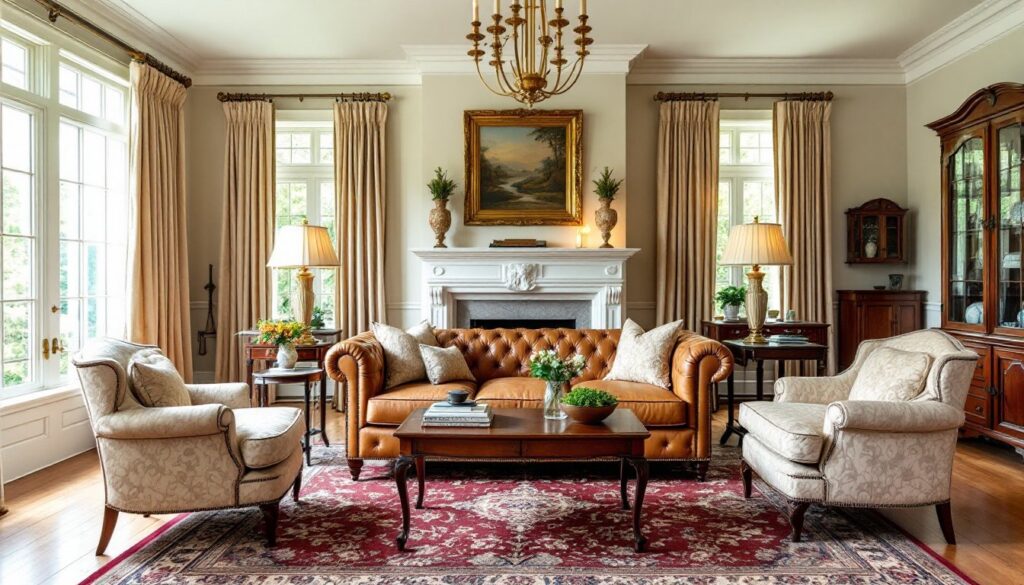
Start with a sofa that measures 84 to 96 inches in length, enough to seat three adults comfortably. Look for rolled arms, wooden exposed legs, and tight or loose cushions depending on your preference for structure versus sink-in comfort.
Wingback chairs are the signature accent seating for traditional rooms. The high back and side wings were originally designed to block drafts near fireplaces, but today they add visual weight and formality. Pair two facing each other or flank a fireplace for classic symmetry.
A loveseat or second sofa works in larger rooms (16×18 feet or bigger). Arrange seating in a U-shape or facing layout to encourage conversation. Avoid pushing all furniture against walls, floating pieces creates intimacy and better traffic flow.
Ottomans serve double duty as footrests and extra seating. Choose one with turned wooden legs and upholstery that complements, not matches, your sofa. Some ottomans include hidden storage, which is practical without sacrificing style.
For those seeking unique, locally inspired designs, vintage and regional furniture makers often offer one-of-a-kind seating that fits traditional aesthetics while adding character.
Tables and Storage Solutions
Coffee tables in traditional rooms are typically 48 to 54 inches long and made from solid hardwood with details like cabriole legs, inlay work, or glass tops framed in wood. Leave 14 to 18 inches of clearance between the table edge and sofa for legroom.
Side tables or end tables should stand roughly level with the sofa arm, usually 24 to 27 inches tall. Match the wood finish across tables for cohesion, or introduce subtle variation with different stains in the same wood species.
A console table behind the sofa or against a wall adds both storage and display space. Look for styles with drawers, lower shelves, and decorative hardware like brass pulls or backplates.
Bookcases and display cabinets with glass doors showcase collections without clutter. Built-in units are ideal if you’re renovating, but freestanding pieces work just as well. Choose ones with crown molding and dentil trim to echo architectural details in the room.
Many families integrate comfort-focused storage pieces that balance traditional form with modern organizational needs, especially in homes where the living room doubles as a family gathering space.
Choosing the Right Materials and Finishes
Solid hardwood is the gold standard for traditional furniture. Oak, maple, cherry, and mahogany hold up to decades of use and can be refinished multiple times. Avoid particleboard or MDF cores on high-use pieces like coffee tables, they won’t survive moisture or weight.
Wood finishes range from light honey oak to deep espresso. Medium to dark stains emphasize grain and add formality. Hand-rubbed finishes with slight sheen look more authentic than high-gloss lacquer, which can read modern.
Upholstery fabric matters as much as frame construction. Velvet adds richness but shows wear in high-traffic homes with kids or pets. Linen blends are durable and easier to clean. Cotton damask or jacquard patterns introduce texture without busy prints.
Check the fabric weight, upholstery-grade textiles should be at least 15 ounces per square yard for seating. Anything lighter pills and sags quickly. Removable cushion covers with hidden zippers allow for cleaning or eventual reupholstering.
Hardware and trim details distinguish quality pieces. Look for solid brass or bronze pulls, not plated zinc that chips. Nailhead trim should be individually applied, not glued-on strips. Classic design resources often showcase the difference between authentic and imitation detailing.
Leather works in traditional settings, especially on wingback chairs or Chesterfield sofas. Top-grain leather ages beautifully: bonded leather flakes and peels within a few years. Expect to pay $1,500 to $3,000 for a quality leather chair, though prices vary by region and retailer.
For wood care, use paste wax or furniture oil rather than spray polishes that build up residue. Dust with microfiber cloths and address spills immediately to prevent water rings.
How to Arrange Traditional Furniture for Maximum Impact
Start by identifying the focal point, usually a fireplace, large window, or built-in shelving. Arrange seating to face or frame this feature. If your room lacks an architectural anchor, a large piece of art or a media console can serve the same purpose.
Measure before you move anything. Use painter’s tape on the floor to outline furniture footprints. This prevents the common mistake of buying a sofa that’s too large or blocking necessary walkways.
Maintain 30 to 36 inches of clearance for primary traffic paths. Between seating pieces, allow 3 to 10 feet depending on room size, closer for intimacy, wider for formal settings.
Symmetry governs traditional layouts. Flank a fireplace with matching chairs and side tables. Center the sofa on the longest wall, with identical lamps or sconces on either end. This doesn’t mean everything must be identical, just balanced in visual weight.
Layer rugs under furniture groupings to define zones. A 9×12-foot rug works for most living rooms: front legs of all seating should rest on the rug, with back legs off. This anchors the arrangement without making the room feel smaller.
Avoid pushing all furniture against walls. Floating a sofa 12 to 18 inches from the wall creates a more intentional, designed look. Use the space behind for a console table or floor lamps.
Inspiration from regional design traditions often emphasizes the importance of conversation-friendly layouts, where no one has to shout across the room or crane their neck to make eye contact.
Lighting completes the arrangement. Position floor lamps behind seating for reading. Add table lamps in pairs on end tables or consoles. Overhead lighting should include a dimmer switch, traditional rooms need flexibility between bright task lighting and soft ambient glow.
Don’t forget the ceiling. If you’re installing or replacing a fixture, a chandelier or semi-flush mount with a traditional silhouette (think brass, crystal, or wrought iron) reinforces the style. Ensure it hangs 7 feet minimum above the floor, centered in the room or over the main seating area.
Conclusion
Traditional living room furniture rewards careful selection and thoughtful placement. It’s not about filling a room with antiques, it’s about choosing pieces with staying power, arranging them with intention, and maintaining the materials so they age well. Done right, a traditional living room feels both elegant and welcoming, a space that works for daily life and special occasions alike.