Modern luxury living room furniture isn’t about chasing trends or filling catalogs with price tags. It’s about intentional design, pieces that balance clean lines, premium materials, and real comfort. In 2026, the bar for “luxury” has shifted. Homeowners want furniture that looks museum-quality but can handle daily life. They’re prioritizing craftsmanship over flash, investing in fewer pieces that actually perform. Whether someone’s furnishing a new build or upgrading a tired space, understanding what separates high-end modern furniture from the rest makes all the difference.
Table of Contents
ToggleKey Takeaways
- Modern luxury living room furniture prioritizes intentional design, premium materials like top-grain Italian leather and solid walnut, and craftsmanship over trends or high price tags.
- Essential pieces for a luxury living room include statement sofas with clean lines (30–32 inch backs, 24–28 inch deep seats), accent chairs with ergonomic support, and properly scaled tables that anchor the space without overwhelming it.
- Material selection is critical: choose solid hardwoods (walnut, oak, teak), performance upholstery fabrics with stain resistance, and quality metal finishes in brass or blackened steel—avoiding chrome, veneers, and bonded leather that deteriorate quickly.
- Proper room planning requires measuring ceiling height, door swings, and traffic flow, ensuring 30–36 inches of clearance for walkways and scaling furniture proportions to avoid a cramped or dominated appearance.
- Styling with layered textures, neutral color palettes (charcoal, taupe, ivory), area rugs with furniture legs anchored on them, and intentional negative space transforms luxury furniture investments into cohesive, comfortable living spaces.
- Maintain modern luxury furniture through monthly vacuuming, semi-annual leather conditioning, quarterly cushion rotation, and the use of coasters and felt pads—protecting your investment for 20+ years of longevity.
What Defines Modern Luxury Living Room Furniture?
Modern luxury furniture strips away ornament in favor of form and function. The aesthetic roots itself in mid-century modernism but evolves with contemporary materials and manufacturing precision. Think low-profile silhouettes, exposed structural elements, and deliberate negative space.
Material quality separates luxury from mass-market goods. Top-grain Italian leather, solid walnut or teak frames, and hand-applied finishes are standard. Construction matters: eight-way hand-tied springs in seating, mortise-and-tenon joinery in case goods, and kiln-dried hardwood frames that won’t warp. These details add cost, but they also add decades to a piece’s lifespan.
Scalability and proportion define modern design. A luxury sofa maintains clean geometry even at 96 inches wide. Legs are often powder-coated steel or solid wood, tapered and set back to create visual lift. Upholstery uses performance fabrics, think solution-dyed acrylics or crypton-treated textiles, that resist staining without looking clinical.
Color palettes lean neutral: charcoal, taupe, ivory, warm grays. Accent pieces might introduce brass, blackened steel, or smoked glass. The goal is cohesion, not contrast. Every piece should feel like it belongs in the same visual family, even if sourced from different makers.
Essential Furniture Pieces for a Modern Luxury Living Room
Building a luxury living room starts with anchor pieces. These are the investments that define the room’s function and visual weight. Skipping foundational furniture or choosing budget stand-ins undermines the entire space.
Statement Sofas and Sectionals
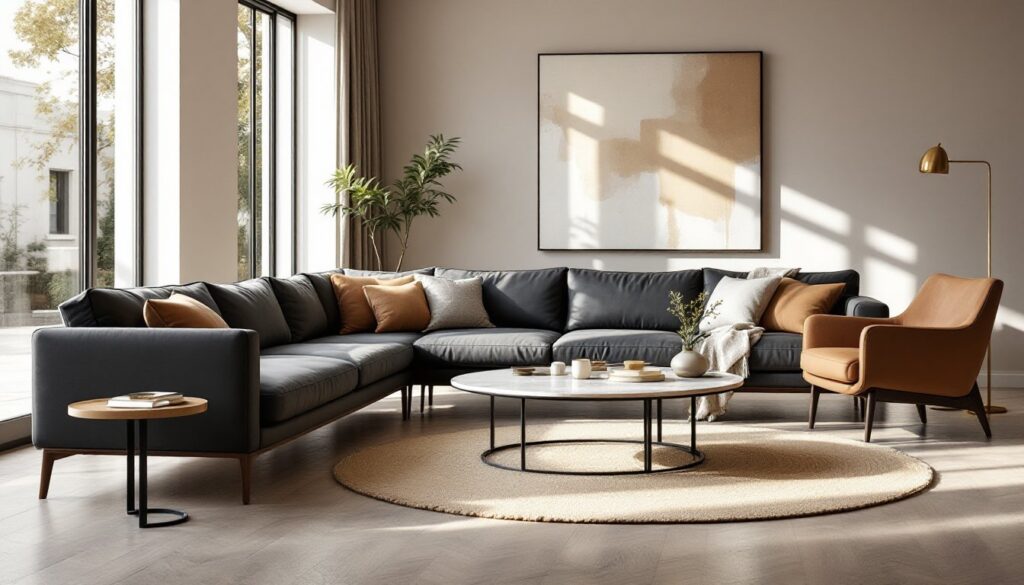
The sofa is the room’s workhorse. For modern luxury, look for modular sectionals with low backs (30–32 inches) and deep seats (24–28 inches). Brands using solid hardwood frames and multi-density foam cushions deliver both comfort and longevity. Down-blend fill adds softness but requires regular fluffing: high-resilience foam holds shape with less maintenance.
Pay attention to leg height and material. Walnut or oak legs at 4–6 inches high give the piece presence without bulk. Powder-coated steel legs in matte black or brushed nickel work in industrial-leaning spaces. Avoid plastic glides: opt for metal or felt to protect hardwood floors.
Configuration matters. L-shaped sectionals suit corner placement and define conversation zones. Straight sofas (84–96 inches) work in symmetrical layouts. If the room exceeds 200 square feet, consider a two-piece sectional with a chaise, it offers flexibility for future rearrangement. Resources like design-forward retailers often showcase how modular seating adapts to various floor plans.
Accent Chairs and Lounge Seating
Accent chairs add visual interest and extra seating without doubling down on sofa mass. Mid-century lounge chairs, think Eames-inspired molded plywood or leather sling designs, anchor reading nooks or flank a fireplace. Look for chairs with contoured backs and lumbar support: aesthetics shouldn’t sacrifice ergonomics.
Materials like full-grain leather or bouclé (a looped textile with texture) are common in luxury accent seating. Leather ages well, developing patina. Bouclé softens angular rooms but shows wear in high-traffic areas, reserve it for chairs used occasionally. For those exploring versatile seating options, mixing materials across chairs and sofas adds depth without clashing.
Pair accent chairs with a side table or pedestal. Marble-topped tables (16–20 inches in diameter) or solid walnut end tables keep drinks and remotes within reach. Avoid glass tops, they show every fingerprint and feel dated in modern luxury contexts.
Top Materials and Finishes for Modern Luxury Furniture
Material choice dictates durability, maintenance, and aesthetic longevity. Luxury furniture leans on time-tested materials with modern finishes.
Solid hardwoods, walnut, oak, teak, form the backbone of case goods and frames. Walnut’s rich brown tones warm minimalist spaces. White oak offers a lighter, Scandinavian-leaning palette. Teak’s natural oils resist moisture, making it ideal for homes in humid climates. Avoid veneers on visible surfaces: they chip and can’t be refinished like solid wood.
Upholstery fabrics separate everyday furniture from investment pieces. Top-grain leather (the hide’s outermost layer) is the gold standard. It breathes, molds to the body, and lasts 20+ years with minimal care. Bonded leather or PU leather won’t cut it, both peel and crack within a few years. For fabric lovers, linen blends (55% linen, 45% cotton) offer texture and breathability. Performance linens treated with stain repellents resist spills without sacrificing hand feel.
Metal accents in brass, blackened steel, or brushed stainless steel appear in legs, hardware, and inlays. Brass develops a patina over time: some prefer the aged look, while others polish it back to a shine. Blackened steel (also called hot-rolled or waxed steel) resists fingerprints and suits industrial aesthetics. Avoid chrome, it reads too commercial for residential luxury.
Stone and engineered stone show up in coffee tables and side tables. Carrara marble, with its gray veining, is classic but porous, seal it annually. Quartzite offers marble’s look with granite’s durability. Sintered stone (ultra-compact surfaces like Dekton) resists scratches, heat, and stains, making it the most practical choice for active households. Publications like Architectural Digest frequently feature these materials in high-end residential projects.
Finishes matter as much as raw materials. Matte lacquers on wood preserve grain visibility while protecting the surface. High-gloss lacquers reflect light but show dust and scratches. Oil-rubbed finishes (linseed or tung oil) enhance wood’s natural character and simplify touch-ups, just reapply oil to worn areas.
How to Choose the Right Modern Luxury Furniture for Your Space
Choosing luxury furniture without measuring first is like framing a wall without finding studs, possible, but risky. Start with room dimensions and traffic flow.
Measure the room (length, width, ceiling height). Note door swings, window placements, and HVAC vents. A sectional that looks perfect online might block a return air grille or make a doorway impassable. Leave 30–36 inches of clearance for primary walkways. Furniture should float in the room, not hug every wall.
Scale furniture to ceiling height. In rooms with 8-foot ceilings, low-profile sofas (30–32 inches tall) prevent the space from feeling cramped. Rooms with 10+ foot ceilings can handle taller case goods and oversized art. A 96-inch sectional in a 12×14-foot room will dominate: in a 16×20-foot space, it anchors without overwhelming.
Test before buying whenever possible. Sit on the sofa for at least five minutes. Check seat depth, feet should rest flat on the floor with back support. Arm height should allow elbows to rest comfortably (23–26 inches is standard). If buying online, confirm the return policy covers large items and who pays return shipping.
Consider existing architecture. Homes with exposed beams or brick walls pair well with furniture featuring organic materials. Mid-century builds suit tapered-leg pieces. Contemporary new builds with open floor plans benefit from modular furniture that defines zones without walls.
Color and finish coordination prevents visual chaos. If flooring is dark (espresso oak, walnut), lighter upholstery (cream, taupe) creates contrast. Light floors (white oak, maple) handle darker furniture. Match metal finishes across the room, don’t mix brass drawer pulls with chrome lamp bases. Designers frequently discuss these color and material pairings in contemporary spaces.
Budget for the whole set, not just the hero piece. A $5,000 sofa looks incomplete without a $1,200 coffee table and $800 side tables. Plan for 60% of the budget on seating, 25% on tables, and 15% on accents (lighting, rugs, decor).
Design Tips for Styling Your Modern Luxury Living Room
Luxury furniture is the foundation, but styling turns a showroom into a home. Modern design thrives on restraint, every object should earn its place.
Layer textures to add warmth. Pair a leather sofa with a wool throw and linen pillows. A jute rug under a glass coffee table softens the hard surface. Textural contrast prevents modern spaces from feeling sterile. Avoid overmatching, three different neutrals (cream, taupe, charcoal) in varying textures look intentional: one beige everything reads flat.
Anchor the room with a rug. Size it so all furniture legs rest on the rug, or at minimum, front legs. A 9×12-foot rug suits most living rooms (150–250 square feet). Natural fibers, wool, jute, sisal, hide dirt and age gracefully. Avoid high-pile shags in modern spaces: low-pile flatweaves or cut-pile rugs maintain clean lines.
Lighting should layer. Combine ambient (overhead or recessed), task (reading lamps), and accent (picture lights or LED strips). Floor lamps with arched arms (65–75 inches tall) work beside sofas. Table lamps on side tables should scale to furniture, base height of 24–28 inches puts the bulb at eye level when seated. Dimmer switches are non-negotiable: they shift a room from daytime function to evening ambiance.
Art and decor follow the rule of odd numbers. Group three objects on a coffee table (a stack of books, a sculptural object, a low vessel). Hang artwork so the center sits 57–60 inches from the floor (gallery height). Oversized single pieces (48×60 inches or larger) anchor walls without clutter. Platforms like Design Milk regularly feature how designers integrate art into modern furniture layouts.
Negative space is a feature, not a failure. Don’t fill every surface. A sofa, two accent chairs, one coffee table, and one side table can complete a 200-square-foot room. More furniture doesn’t equal more luxury, it equals clutter. If someone’s second-guessing whether to add another piece, the answer is usually no.
Maintain and protect investments. Vacuum upholstery monthly using the brush attachment. Condition leather twice a year with a pH-neutral conditioner. Rotate cushions quarterly to even wear. Use coasters on wood and stone surfaces, even sealed finishes can stain. Felt pads under every leg prevent floor scratches. Luxury furniture isn’t delicate, but neglect voids its longevity advantage over cheaper alternatives.
Modern luxury living rooms succeed when form, function, and material quality align. The best spaces feel effortless because every decision, from sofa height to lamp placement, was intentional. With the right pieces and a clear plan, anyone can build a room that looks expensive and lives comfortably.