Mid century modern furniture has outlasted its 1950s origins for good reason: clean lines, functional design, and a timeless aesthetic that refuses to look dated. Whether you’re furnishing a new space or refreshing an existing room, understanding what makes a piece authentically mid century, and how to choose the right ones, keeps your living room from feeling like a museum exhibit or a mismatched thrift store haul. This guide walks through the defining characteristics, essential pieces, selection criteria, and styling strategies to build a cohesive, livable mid century modern living room in 2026.
Table of Contents
ToggleKey Takeaways
- Mid century modern living room furniture emphasizes clean lines, functional design, and timeless aesthetics by combining tapered wooden legs, low horizontal profiles, and honest material use without ornamental excess.
- Authentic mid century pieces feature solid hardwood frames with quality joinery, while reproductions using particle board and veneer may look similar but won’t withstand decades of use like genuine designs.
- Measure your space first—including doorways, ceilings, and walkways—to ensure mid century furniture pieces fit the room’s scale and traffic flow without feeling cramped or cluttered.
- Invest in a high-quality sofa ($1,200–$3,500) as an anchor piece with firm cushions and exposed wooden frame rather than purchasing multiple cheap alternatives with poor construction.
- Balance mid century modern furniture with contemporary elements like modern lighting, abstract art, plants, and textured textiles to avoid a sterile museum feel while maintaining cohesive design.
- Scale furniture to your ceiling height and room size: choose low-profile pieces for 8-foot ceilings and compact sofas (70–75 inches) for spaces under 200 square feet.
What Defines Mid Century Modern Living Room Furniture
Mid century modern design emerged between roughly 1945 and 1969, influenced by Bauhaus principles and Scandinavian functionalism. The style prioritizes form following function, organic curves paired with geometric precision, and honest use of materials.
Key characteristics include:
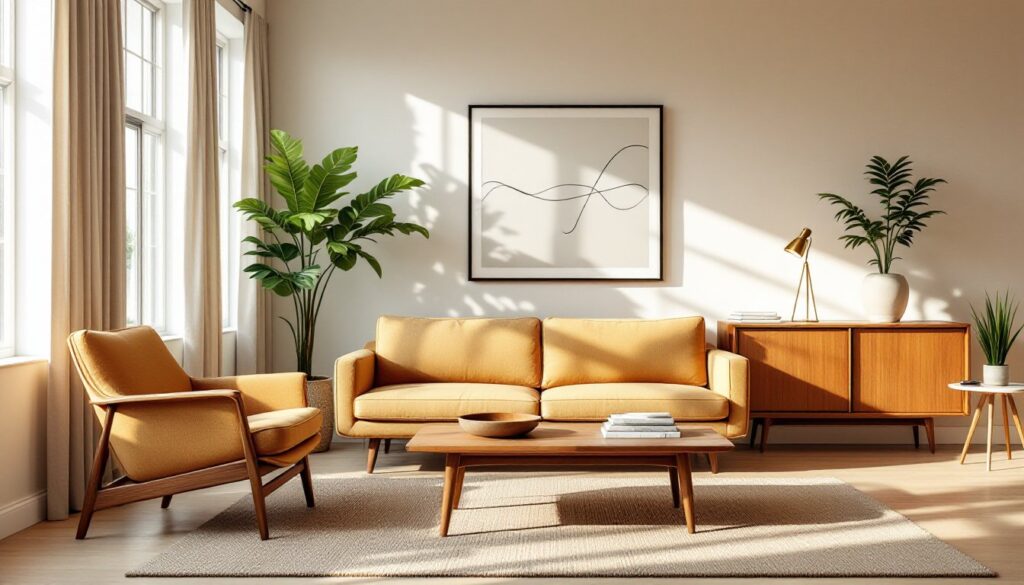
- Tapered legs: Most pieces sit on angled wooden legs, typically splayed outward for stability. Legs are usually solid wood, walnut, teak, or oak, left natural or lightly stained.
- Low, horizontal profiles: Sofas, credenzas, and media consoles sit lower to the ground than traditional furniture, emphasizing horizontal lines that make rooms feel wider.
- Minimal ornamentation: No carved details, tufting (with rare exceptions), or decorative hardware. Beauty comes from proportion and material quality.
- Mixed materials: Wood frames combined with upholstered cushions, metal accents, glass tops, or molded plywood. Leather, wool, and linen were common upholstery choices.
- Organic and geometric forms: Curved chair backs, kidney-shaped coffee tables, and rectangular credenzas coexist without clashing.
Authentic mid century pieces were produced by designers like Charles and Ray Eames, Hans Wegner, and Arne Jacobsen. Reproductions and inspired designs flood the market today, some faithful, others cheap knockoffs. Look for solid joinery (mortise-and-tenon or dowel joints), quality hardwoods, and proportions that match original dimensions. Particle board frames with veneer wraps aren’t mid century: they’re just budget furniture with tapered legs.
Essential Mid Century Modern Furniture Pieces for Your Living Room
Building a mid century living room doesn’t mean buying everything at once or hunting down vintage originals. Start with anchor pieces, then layer in accents.
Statement Sofas and Seating Options
The sofa sets the room’s tone. Mid century sofas typically feature:
- Tight cushions or loose box cushions: Avoid overstuffed pillow-back styles. Cushions should be firm, often filled with high-density foam or down-wrapped foam cores.
- Exposed wooden frames: Arms and bases show walnut, teak, or oak frames. Some designs have fully upholstered bodies on wooden legs.
- Standard depth around 30–34 inches: Shallower than contemporary sectionals, which encourages upright posture.
Popular styles include the three-seater with tufted buttons (like the mid century sculptural furniture pieces that defined the era), low-slung daybeds, and compact loveseats. Pair the sofa with lounge chairs, either molded plywood shells with leather cushions or upholstered barrel chairs on wood legs.
If budget allows, invest in one high-quality sofa (expect $1,200–$3,500 for a well-constructed reproduction) rather than multiple cheap pieces. Solid hardwood frames last decades: particleboard sags within five years.
Seating layout tip: Arrange furniture to define conversation zones without blocking sightlines. Float the sofa a few feet from the wall, add a pair of lounge chairs at angles, and leave walkways at least 30 inches wide.
Coffee Tables and Accent Tables
Mid century coffee tables come in three dominant shapes:
- Rectangular with tapered legs: Simple four-leg designs in walnut or teak, sometimes with a lower shelf.
- Organic shapes: Kidney, triangle, or asymmetric tops on angled legs.
- Hairpin-leg designs: Thin steel rod legs supporting wood or glass tops.
Standard coffee table height is 16–18 inches, slightly lower than traditional styles. Tops should sit level with or just below sofa cushions.
Accent tables include:
- Nesting tables: Sets of two or three that tuck under one another when not in use.
- C-tables: Slide under sofa arms for laptop or drink placement.
- Side tables: Small round or square tables with angled legs, typically 20–24 inches tall.
Materials matter. Solid wood with book-matched veneer looks richer than laminate. Glass tops lighten visual weight but show fingerprints and scratches. If you have young kids or pets, choose sealed hardwood over glass.
For spacing, leave 14–18 inches between the sofa and coffee table edge. This allows legroom without overreaching for drinks.
How to Choose the Right Mid Century Modern Furniture for Your Space
Even authentic mid century pieces fail if they don’t fit the room’s scale, traffic flow, or functional needs.
Measure first, always. Get exact dimensions of the room, doorways, and stairs. Note the height of windows and electrical outlets. A 90-inch sofa might look perfect online but won’t turn the corner into your living room if the hallway is 36 inches wide.
Scale to ceiling height and floor area:
- Low ceilings (8 feet): Stick with low-profile furniture. Tall bookcases or high-back chairs make the room feel cramped.
- High ceilings (9+ feet): You can go taller with credenzas or add vertical elements like floor lamps with arched stems.
- Small rooms (under 200 sq ft): Choose a loveseat or compact sofa (70–75 inches) instead of a full three-seater. Use nesting tables or C-tables that tuck away.
Traffic flow: Map walking paths between entry, seating, and exits. Leave at least 30 inches for walkways, 42 inches for high-traffic zones. Furniture legs shouldn’t intrude into paths.
Function over form: If you host weekly game nights, a coffee table with a lower shelf for board games beats a sculptural piece with no storage. If you nap on the sofa, firm cushions might be less comfortable than a modern hybrid with supportive foam cores and softer toppers.
Color and material coordination:
- Wood tones: Mixing walnut, teak, and oak works if you keep the undertones consistent, either all warm (honey, amber) or all cool (gray-brown). Don’t mix cherry with walnut unless you want a chaotic look.
- Upholstery: Neutrals (charcoal, camel, olive, mustard) are period-appropriate. Avoid loud patterns unless you’re recreating a specific vintage vibe.
- Finish: Matte or satin finishes look more authentic than high-gloss lacquer, which leans contemporary.
Budget tiers:
- Entry-level reproductions ($300–$800 per piece): Expect engineered wood frames, lower-grade foam, and inconsistent QC. Fine for apartments or starter homes.
- Mid-range ($800–$2,500): Solid hardwood frames, quality joinery, better upholstery. This tier offers the best value for long-term use.
- High-end and vintage originals ($2,500–$10,000+): Designer pieces, rare woods, original 1950s–60s items. Worth it if you’re a serious collector or prioritize investment-grade furniture.
Buying vintage? Inspect joints, check for wood rot or insect damage, and reupholster if the original fabric is stained or worn. Factor reupholstery costs ($500–$1,500 depending on piece size and fabric choice) into your budget.
Styling Tips: Blending Mid Century Pieces with Contemporary Decor
Pure mid century rooms can feel sterile or too themed. Mixing in contemporary elements keeps the space livable and personal.
Layer textures: Mid century furniture is smooth and streamlined, so add textured throw pillows (linen, boucle, wool), woven baskets, and area rugs. A jute or low-pile wool rug grounds the seating area without competing visually.
Introduce modern lighting: Swap generic ceiling fixtures for sputnik chandeliers, arc floor lamps, or tripod table lamps. Lighting is one of the fastest ways to reinforce the mid century aesthetic. Adjustable task lighting (like swing-arm wall sconces) adds function without clutter.
Art and wall decor: Abstract prints, line drawings, and black-and-white photography fit the era. Avoid ornate frames, stick with simple wood or thin metal. For a modern design perspective, consider mixing vintage art with contemporary photography or graphic prints.
Plants and greenery: Live plants in ceramic or wooden planters soften hard lines. Popular mid century choices include snake plants, fiddle-leaf figs, and pothos. Use plant stands with tapered legs to echo furniture forms.
Color pops: While neutrals dominate, accent colors like burnt orange, avocado green, or goldenrod yellow were common in the 1960s. Add these through pillows, throws, or a single accent chair rather than large upholstered pieces.
Contemporary additions that work:
- Smart home tech: Hide cable boxes and routers inside credenzas with ventilation holes. Use cable management clips to keep cords out of sight.
- Modern media consoles: If you can’t find an authentic mid century credenza that fits your TV, choose a contemporary piece with clean lines and tapered legs.
- Updated upholstery: Reupholster vintage chairs in durable performance fabrics (like designer-approved textiles that balance style and practicality) if the originals are fragile or outdated.
What to avoid:
- Rustic or farmhouse elements: Distressed wood, mason jars, and shiplap clash with mid century sleekness.
- Heavy drapes: Use simple roller shades, wood blinds, or linen curtains on minimalist rods.
- Overstuffed furniture: Contemporary sectionals with deep cushions and rolled arms don’t mesh with mid century profiles. Keep silhouettes lean.
Balance is key. If 70% of your furniture is mid century, the remaining 30% can be contemporary accents that enhance rather than distract.
Conclusion
Mid century modern living room furniture offers a proven blueprint for spaces that feel open, functional, and stylish without chasing trends. Stick to authentic design principles, tapered legs, clean lines, honest materials, and choose pieces that fit your room’s scale and daily use. Mix vintage finds with quality reproductions, layer in contemporary touches, and resist the urge to theme every corner. Done right, a mid century living room ages gracefully, adapts to changing needs, and remains a comfortable place to actually live, not just photograph.