Arranging living room furniture around a TV isn’t just about plopping a sectional in front of the screen and calling it done. Done right, it balances sightlines, traffic flow, conversation space, and comfort, all while keeping the room functional for more than just binge-watching. Done wrong, you’ll end up with neck strain, glare on the screen, or a layout that feels cramped or awkward every time someone walks through. This guide walks through the practical considerations for TV placement, seating arrangement, and furniture balance to create a living room that actually works for how people use it.
Table of Contents
ToggleKey Takeaways
- Arrange living room furniture with TV by first identifying the best wall to minimize glare and maximize flexibility, then positioning your TV at 40-48 inches from the floor centered at eye level when seated.
- Optimal viewing distance for 4K TVs is 1 to 1.5 times the screen’s diagonal measurement, so a 65-inch TV works best with seating 5.5 to 8 feet away to ensure comfortable, strain-free viewing.
- Position your primary sofa facing the TV at no more than a 30-degree angle, maintain 14-18 inches between the sofa and coffee table, and keep at least 30-36 inches of walkway clearance for natural traffic flow.
- Balance your layout with secondary furniture pieces like end tables (24-27 inches tall), media consoles (3-6 inches wider than the TV), and flanking shelves to create visual harmony without overwhelming the space.
- Choose a tried-and-true layout like the L-shape, floating arrangement, symmetrical setup, or sectional corner based on your room’s shape and size, then adjust for specific challenges like narrow rooms, multiple doorways, or off-center windows.
- Wall-mount the TV to save floor space in small rooms and use an area rug, floating sofa, or room dividers to create defined zones and prevent the space from feeling cramped or awkward.
Finding the Perfect TV Placement for Your Living Room
The TV’s location drives everything else in the room. Start by identifying the wall that offers the least glare from windows and the most flexibility for furniture arrangement. Avoid placing a TV directly opposite large, uncovered windows, even the best anti-glare screens struggle against midday sun.
Wall-mounted vs. console placement is the first decision. Wall-mounting saves floor space and allows for cleaner cable management, but it requires hitting studs (typically 16 inches on center in most residential framing) or using toggle anchors rated for the TV’s weight plus 50% safety margin. A console or media stand offers more flexibility if the room layout might change, and it provides storage for equipment, remotes, and clutter.
Consider the room’s focal point. In many living rooms, the TV competes with a fireplace. If both are on the same wall, mounting the TV above the mantel is common but not always ideal (more on height below). If they’re on different walls, decide which one anchors the primary seating, forcing people to swivel between the two creates an awkward split focus.
Determining Optimal Viewing Distance and Height
Viewing distance depends on screen size and resolution. For 4K TVs (the standard in 2026), a general rule is to sit 1 to 1.5 times the screen’s diagonal measurement away. A 65-inch TV works well with seating 5.5 to 8 feet away: a 55-inch screen is comfortable at 4.5 to 7 feet. For 1080p sets, double that distance to avoid seeing individual pixels.
Mounting height matters more than most people think. The center of the screen should sit at or slightly below eye level when seated, typically 40 to 48 inches from the floor to the center of the screen, depending on furniture height and the viewer’s seated posture. Mounting a TV too high (a common mistake, especially above fireplaces) forces viewers to tilt their heads back, leading to neck strain during longer viewing sessions. If an above-fireplace mount is unavoidable, consider a tilting or pull-down mount to angle the screen downward.
Measure from your actual seating position, not a standing eye level. Sit on the sofa or chair where you’ll typically watch, and mark the wall at your natural eye level. That’s your target center point.
Arranging Seating Around Your TV for Maximum Comfort
Once the TV placement is locked in, arrange seating to create clear sightlines without crowding the screen or blocking traffic paths.
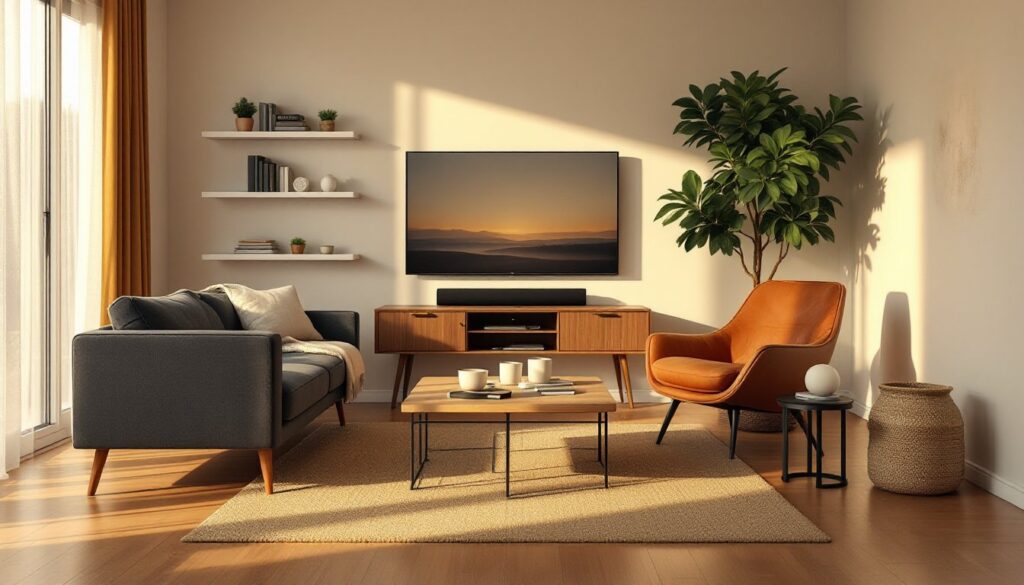
Primary seating (sofa or sectional) should face the TV directly or at a slight angle, no more than 30 degrees off-center to avoid awkward neck twisting. Leave 12 to 18 inches between the back of the sofa and the wall for breathing room and to accommodate electrical outlets or baseboards. If the room allows, floating the sofa a few feet from the wall creates a more intentional, layered look and leaves space for a console table or floor lamp behind it.
Secondary seating, armchairs, accent chairs, or a loveseat, should angle toward the TV while also facilitating conversation. An L-shaped or U-shaped arrangement works well for multipurpose rooms where people gather to talk as much as they watch. Position chairs within the same general viewing arc as the sofa, and avoid placing them so far to the side that viewers have to turn their heads more than 45 degrees.
Coffee table placement affects comfort and flow. Leave 14 to 18 inches between the front of the sofa and the coffee table edge, enough to walk past without bumping shins, but close enough to set down a drink or reach the remote. Keep the table’s length proportional to the sofa: ideally two-thirds to three-quarters the sofa’s width.
Traffic paths matter. Maintain at least 30 to 36 inches of clearance for walkways between furniture pieces and around the perimeter of the seating area. In smaller rooms, that might mean choosing a loveseat instead of a full sofa, or using armless chairs that tuck in more tightly.
Creating Balance With Secondary Furniture Pieces
A living room is more than a TV and a couch. Secondary furniture fills in the gaps, adds function, and keeps the layout from feeling lopsided.
Side tables and end tables should sit within easy reach of seating, typically 24 to 27 inches tall to match standard sofa arm height. Use one on each end of the sofa for symmetry, or cluster a pair near an armchair for a reading nook vibe. In smaller rooms where space is tight, a C-shaped side table that slides under the sofa arm saves floor space.
Media consoles and TV stands should be wider than the TV itself, aim for the console to extend 3 to 6 inches beyond each side of the screen for visual balance. Standard console height is 24 to 30 inches, which positions most TVs at a comfortable viewing height when placed on top (assuming a 40- to 55-inch screen). Make sure the console has enough depth (at least 16 inches) to accommodate a soundbar, cable box, or gaming console without everything hanging off the edge.
Bookshelves and storage units can flank the TV to create a built-in look without the cost or permanence of custom cabinetry. This works especially well in modern furniture arrangement schemes where symmetry and clean lines matter. Keep shelves from overwhelming the TV, use lower-profile units or open shelving to avoid a heavy, closed-in feel.
Lighting plays a supporting role in balance. A floor lamp behind or beside an armchair provides task lighting for reading, while a table lamp on a console or end table adds ambient light and visual weight to anchor that side of the room. In rooms relying on overhead lighting alone, everything tends to look flat and uninviting.
Common Living Room Furniture Layouts That Work With TVs
Certain tried-and-true layouts solve most room shapes and sizes. Here are the workhorses:
The classic L-shape: Sofa on one wall, loveseat or pair of chairs on an adjacent wall, TV opposite the sofa. This creates a natural conversation zone while keeping the TV central. Works best in square or near-square rooms.
The floating arrangement: Sofa floats in the middle of the room, facing the TV on one wall. A console table or low bookshelf sits behind the sofa to define the space and add storage. Use an area rug to anchor the seating zone. This layout suits open-plan spaces where the living room shares square footage with a dining area or kitchen.
The symmetrical setup: TV centered on one wall, flanked by matching storage units or shelves. Sofa directly opposite, with matching armchairs or end tables on either side. This appeals to those who prefer structured design tips and a sense of order. It’s also easier to pull off in smaller rooms where there aren’t many layout variables.
The sectional corner: A sectional anchors one corner of the room, with the TV on the adjacent wall. This maximizes seating in compact spaces and creates a cozy, enveloping feel. Be mindful of sightlines, those sitting on the far end of the sectional shouldn’t have to crane their necks.
The dual-purpose layout: In multipurpose rooms, orient primary seating toward the TV, but include a secondary seating area (two chairs and a small table) oriented toward a window or fireplace. This respects the fact that not everyone in the household wants to watch TV at the same time.
Solving Tricky Layout Challenges and Awkward Spaces
Not every living room is a tidy rectangle with one obvious wall for the TV. Here’s how to handle the curveballs.
Long, narrow rooms: Avoid the bowling alley effect by breaking the space into zones. Place the TV and seating in one zone, and use a bookshelf, console, or sofa table to visually divide the room and create a separate reading or workspace in the other half. Floating the sofa partway down the room (rather than pushing it against the far wall) shortens the viewing distance and makes the layout feel less stretched.
Rooms with multiple doorways: Map traffic flow before placing furniture. Arrange seating to preserve clear paths between doorways, even if that means angling the sofa or choosing a smaller sectional. Blocking a main walkway with furniture turns every trip to the kitchen into an obstacle course.
Off-center windows or fireplaces: If the TV can’t be centered on a wall due to a window or hearth, embrace asymmetry. Balance the off-center TV with a tall plant, floor lamp, or bookshelf on the opposite side. The goal is visual weight distribution, not perfect symmetry.
Small living rooms: In tight quarters, every inch counts. Wall-mount the TV to free up floor space. Choose a loveseat or apartment-scale sofa (typically 76 inches or less) instead of a full-size sectional. Opt for armless chairs, nesting tables, or a narrow console. According to small space living ideas, keeping furniture legs visible (rather than skirted or bulky) helps a small room feel more open.
Corner TV placement: Putting the TV in a corner can work in oddly shaped rooms, but it rarely looks intentional. If it’s unavoidable, use a corner TV stand designed for the purpose, and arrange seating in an arc facing the corner. Keep the angle shallow to minimize neck strain for viewers on the ends.
Rooms with lots of windows: If glare is unavoidable, invest in blackout or solar shades that can be drawn during daytime viewing. Position the TV on the wall perpendicular to the largest window rather than directly opposite, which cuts down on reflections without sacrificing natural light.
Conclusion
Good furniture arrangement isn’t about following a template, it’s about understanding proportions, sightlines, and how the room gets used. Measure carefully, mock up layouts with painter’s tape on the floor if needed, and don’t be afraid to move things around until they click. A well-arranged living room makes TV watching comfortable, conversation easy, and traffic flow natural.