Grey patio furniture has quietly become the go-to choice for homeowners who want outdoor spaces that look sharp without demanding constant upkeep. It’s neutral enough to work with any landscaping, bold enough to anchor a seating area, and forgiving enough to hide the inevitable dust and pollen that settles between cleanings. Whether you’re furnishing a sprawling deck or a narrow apartment balcony, grey offers a clean slate that won’t clash with seasonal cushions or compete with blooming plants. This guide walks through the best materials, styling tricks, and maintenance habits to keep your setup looking fresh year after year.
Table of Contents
ToggleKey Takeaways
- Grey patio furniture is visually neutral yet intentional, hiding dirt and weather damage better than white or dark colors while adapting seamlessly to any design style from coastal to Mediterranean to urban.
- Synthetic wicker over powder-coated aluminum frames and aluminum dining sets are the most durable and low-maintenance options for grey patio furniture, requiring only regular soap-and-water cleaning and occasional hardware tightening.
- Styling grey patio furniture effectively relies on accessories like weather-resistant cushions, outdoor rugs, and statement pieces in accent colors pulled from your landscaping or home exterior rather than exact color matches.
- Proper maintenance—including gentle cleaning, immediate rust touch-ups on metal pieces, and off-season storage of cushions—extends the lifespan of grey outdoor furniture and keeps it looking fresh year after year.
- Grey weather gracefully because lighter shades disguise sun-bleaching and darker shades hide mildew and water spots, making it especially practical for humid or high-pollen climates.
Why Grey Patio Furniture Is the Perfect Choice for Modern Outdoor Spaces
Grey sits in that rare sweet spot where it’s visually interesting without being loud. Unlike white furniture that shows every speck of dirt or dark colors that absorb heat and fade fast under UV exposure, grey hides minor stains and reflects enough sunlight to stay cooler on summer afternoons.
From a design standpoint, grey anchors a space without locking you into a single color palette. Pair it with navy and white for a coastal vibe, add terracotta and olive for Mediterranean warmth, or layer in black and metallics for a sleek, urban look. The same charcoal sectional can transition through seasons just by swapping out throw pillows and outdoor rugs.
Grey also reads as intentional. A well-chosen grey dining set or lounge chair signals that someone put thought into the space, rather than grabbing whatever was on clearance. It’s the difference between a backyard that looks furnished and one that looks designed.
Finally, grey weathers gracefully. Lighter greys disguise sun-bleaching better than saturated colors, and darker greys hide mildew or water spots that tend to creep in around joints and welds. This makes it especially practical for climates with high humidity or heavy pollen counts.
Popular Types of Grey Patio Furniture and Their Best Uses
Grey Wicker and Rattan Sets for Relaxed Elegance
Synthetic wicker, typically made from polyethylene resin, dominates the grey outdoor furniture market, and for good reason. It’s UV-resistant, won’t splinter, and handles rain without rotting. Look for all-weather wicker woven over a powder-coated aluminum frame: the metal won’t rust, and the weave stays tight even after years of sun exposure.
Grey wicker works best for lounge-focused areas: sectionals, deep-seat chairs with 4-inch cushions, and coffee tables. The texture adds visual interest without pattern, so it layers well with striped or geometric fabrics. Avoid ultra-cheap wicker sets with thin, glossy strands, they crack within a season. Quality resin has a matte finish and feels slightly rough to the touch.
One trade-off: wicker furniture is light, which makes it easy to rearrange but also prone to tipping in high winds. Anchor pieces with weighted bases or tuck them against a wall during storm season. If you’re in a coastal area, rinse the weave monthly to clear salt residue that can degrade the resin over time.
Metal and Aluminum Grey Furniture for Durability
Powder-coated aluminum is the workhorse of grey outdoor furniture. It won’t rust, weighs significantly less than wrought iron, and holds up in all climates. Grey powder coating also hides scratches better than black or white finishes, a key consideration if you’re dragging chairs across a stone patio or have kids who treat furniture like playground equipment.
Aluminum dining sets, bar-height tables, and stackable chairs suit high-traffic areas. They’re low-maintenance: a quick wipe-down with soapy water handles most grime, and the finish doesn’t need annual resealing like wood. For those considering patio furniture clearance deals, aluminum sets often appear at steep discounts in late summer.
Wrought iron in grey is less common but still worth mentioning. It’s significantly heavier, which keeps it anchored in wind, but it will rust if the finish chips. Touch up nicks with rust-inhibiting primer and matching spray paint immediately. Steel furniture falls somewhere in between, stronger than aluminum but heavier and more prone to corrosion without proper coating.
For a modern, industrial look, grey metal mesh or perforated designs add breathability and dry fast after rain. Just check the welds and joints before buying: poor craftsmanship shows up as rough edges or gaps where moisture can seep in.
How to Style Grey Patio Furniture with Color and Accessories
Grey functions as a neutral backdrop, so the accessories carry most of the visual weight. Start with outdoor cushions in weather-resistant fabrics like Sunbrella or solution-dyed acrylic, which resist fading and mildew. A common mistake is choosing cushions that exactly match the furniture, this flattens the look. Instead, pull accent colors from your landscaping or home exterior.
For a coastal scheme, layer navy, aqua, and white striped cushions with a natural jute rug. Add a few ceramic planters in terracotta or glazed blue to tie the palette together. If your style leans more farmhouse, consider warm neutrals: cream, tan, and soft sage, anchored by a woven outdoor rug and galvanized metal planters.
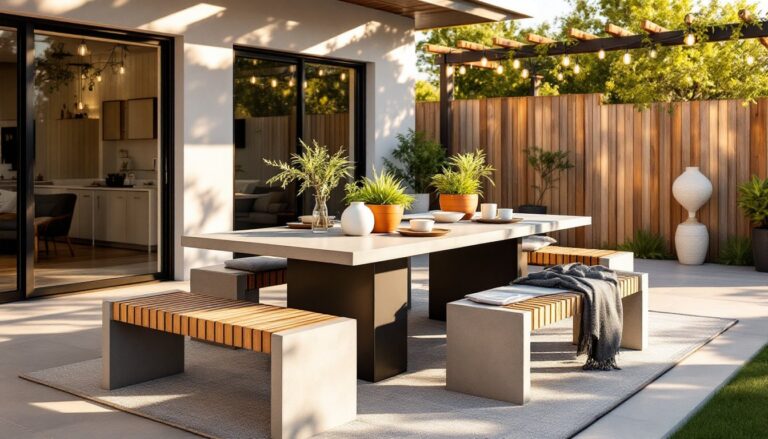
Lighting shifts the mood dramatically. String Edison-bulb cafe lights overhead for a bistro feel, or use battery-powered LED lanterns on side tables for portability. Grey furniture disappears a bit at dusk, so warm-toned lighting (around 2700K color temperature) prevents the space from feeling cold or institutional.
Don’t overlook the power of a statement piece. A bright outdoor throw in mustard or coral, a patterned outdoor rug, or even a bold umbrella can anchor the entire setup. Many homeowners find inspiration from curated grey collections that showcase how textures and layers keep neutral palettes from feeling bland.
Finally, scale your accessories to your furniture. Oversized planters and chunky side tables suit deep-seat sectionals, while slim bistro sets call for compact lanterns and small potted herbs. Proportion matters as much outdoors as it does inside.
Maintenance Tips to Keep Your Grey Outdoor Furniture Looking New
Even the toughest outdoor furniture needs routine care. Grey finishes are forgiving, but neglect still shows up as streaks, fading, or structural weakening.
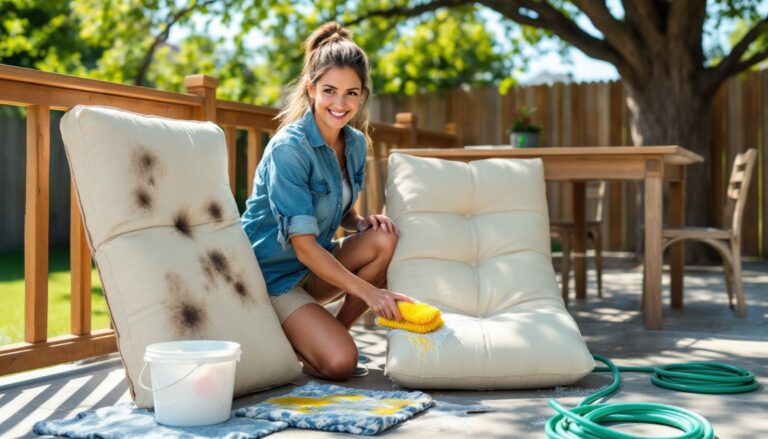
General cleaning: Mix a few drops of dish soap with warm water, scrub with a soft-bristle brush, and rinse thoroughly. For synthetic wicker, get into the weave with a toothbrush to dislodge trapped dirt. Aluminum frames just need a wipe-down, but check joints and screws for loose hardware annually, tighten with a hex key or screwdriver as needed.
Cushion care: Most outdoor cushions have removable covers. Wash them in cold water on a gentle cycle, then air-dry, never use a dryer, as heat can shrink or warp the fabric. For non-removable cushions, spot-clean with a 10:1 water-to-bleach solution for mildew, then rinse and let dry completely in the sun. Store cushions indoors or in a waterproof deck box during off-season to extend their life.
Rust prevention: If you’ve got metal furniture with any chips or scratches, address them immediately. Sand the area lightly with 120-grit sandpaper, apply a coat of rust-inhibiting primer, and finish with outdoor spray paint in a matching grey. This 15-minute fix can add years to the furniture’s lifespan.
UV protection: Even powder-coated finishes fade over time. For high-value pieces, consider applying a UV-protectant spray designed for outdoor furniture once a season. It won’t reverse existing fading, but it slows future damage. Position furniture under a pergola, umbrella, or retractable awning during peak sun hours when possible.
Winter storage: If you live in a freeze-thaw climate, bring cushions inside and either store furniture in a shed or cover it with breathable furniture covers (not plastic tarps, which trap moisture). Elevate pieces slightly with furniture risers or blocks to keep them off wet ground.
Those looking to expand or refresh their outdoor setup can explore options through home goods patio collections that align with these maintenance-friendly materials. Regional design trends, like those featured in Southern Living or Country Living, often highlight durable finishes suited to humid or variable climates.
Conclusion
Grey patio furniture earns its popularity by balancing style, practicality, and flexibility. It adapts to shifting trends without requiring a full replacement, hides the wear that comes with outdoor living, and provides a solid foundation for seasonal updates. Choose quality materials, maintain them consistently, and you’ll have a setup that looks intentional for years.