Living in a small space doesn’t mean settling for cramped quarters or sacrificing style. The right furniture can make a 200-square-foot living room feel twice its size, while the wrong pieces turn it into an obstacle course. With urban living spaces shrinking and the average American apartment now 15% smaller than a decade ago, choosing furniture that works with your square footage matters more than ever. This guide covers proven furniture selections and arrangements that maximize both function and breathing room without requiring a contractor or a complete renovation.
Table of Contents
ToggleKey Takeaways
- Choosing appropriately scaled furniture for small living rooms prevents visual clutter and maximizes space—select fewer pieces that serve multiple functions like storage, seating, or surfaces.
- Compact sofas and loveseats (58–80 inches) with exposed legs and lower arm heights provide comfortable seating without dominating a small room like standard full-size sofas.
- Multi-functional furniture for small living rooms, such as lift-top coffee tables, storage ottomans, and sleeper sofas, transforms limited space into versatile areas for working, dining, and sleeping.
- Floating furniture 12–18 inches from walls and maintaining 30–36 inches of primary walkway clearance creates depth and improves traffic flow in compact layouts.
- Vertical storage solutions like tall narrow bookcases and wall-mounted shelves maximize floor space compared to bulky horizontal furniture pieces and entertainment centers.
- Arrange furniture around a focal point and use area rugs to define zones, keeping one wall relatively open to prevent the space from feeling cramped or visually overwhelming.
Why Choosing the Right Furniture Matters in a Small Living Room
Scale and proportion determine whether a small living room feels cozy or claustrophobic. A standard three-seater sofa typically measures 84 to 90 inches wide, nearly 7.5 feet of wall space plus clearance. In a 12×14-foot living room, that’s over half your longest wall consumed by a single piece.
Poor furniture choices create physical bottlenecks and visual clutter. Oversized pieces block natural light pathways, while too many small items fragment the space into a chaotic mess. The goal isn’t to cram in more stuff, it’s to select fewer, better-scaled pieces that serve multiple purposes.
Functional furniture density matters. Every piece should either provide seating, storage, or surface area, ideally two of the three. A coffee table with drawers beats a decorative side table that holds one book. An armless loveseat allows better traffic flow than a bulky recliner.
Proportional furniture also impacts resale and rental appeal. Properties staged with appropriately sized furniture photograph better and help potential buyers or renters visualize the space realistically. Oversized staging can actually hurt perceived room size.
Essential Furniture Pieces for Small Living Rooms
Compact Sofas and Loveseats
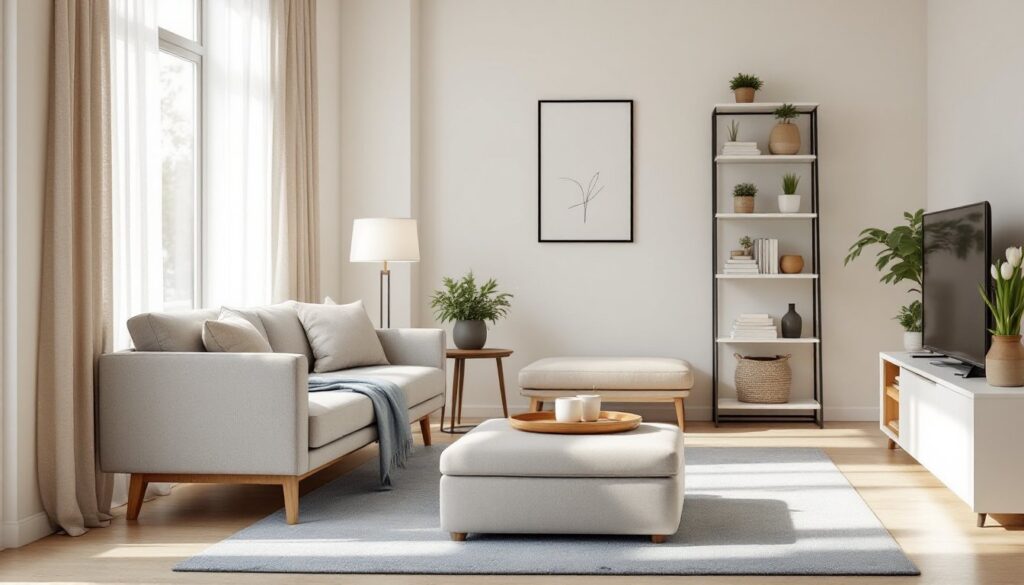
A loveseat measuring 58 to 70 inches wide provides comfortable seating for two without dominating the room. Look for models with exposed legs, they create visual space underneath and make the floor area appear larger. Avoid skirted bases that hit the floor: they visually shrink the room.
Apartment-size sofas (72 to 80 inches) split the difference between a loveseat and full sofa. Many compact seating options feature shallower seat depths (30 to 32 inches instead of the standard 36 inches), which saves 4 to 6 inches of floor space without sacrificing comfort for most adults.
Armless or low-arm designs add functional width. A sofa with 8-inch track arms versus 12-inch rolled arms gains you 8 inches of seating width in the same footprint. Modular sectionals with reversible chaise pieces let you reconfigure as needed, critical for renters who move frequently.
Skip built-in recliners unless you have a dedicated TV room. They require 18 to 24 inches of clearance behind them to fully extend, eating up space you can’t afford to waste.
Multi-Functional Coffee Tables
A coffee table should sit 14 to 18 inches from your sofa for comfortable legroom. In tight quarters, that standard is negotiable. Nesting tables or C-shaped side tables that tuck under sofa arms provide surfaces without permanent floor space commitment.
Lift-top coffee tables are game-changers for small spaces. The top raises to dining or work height (typically 24 to 28 inches), turning your living room into a workspace or dining area. Most include hidden storage compartments for blankets, remotes, or board games. Look for models with pneumatic lift hinges, they’re smoother and more durable than spring-loaded versions.
Ottomans with removable trays serve triple duty: seating, footrest, and storage. A 36-inch square ottoman can hold as much as a small closet while doubling as extra seating when guests visit. Choose upholstered versions rather than hard-surface, you’ll appreciate the flexibility when someone inevitably bumps into it.
Glass or acrylic tables create visual transparency. While they don’t actually save space, they reduce visual weight. A 12mm tempered glass top is strong enough for daily use and won’t shatter into sharp shards if broken.
Space-Saving Furniture Solutions That Actually Work
Wall-mounted floating shelves replace bulky bookcases and entertainment centers. A set of 10-inch-deep shelves holds books, decor, and media components while keeping 16 inches of floor space clear compared to a standard cabinet. Install them on wall studs using appropriate anchors, drywall alone won’t support much weight. Expect each stud-mounted bracket to safely hold 30 to 50 pounds.
Furniture with built-in storage eliminates the need for separate cabinets. Storage ottomans, benches with lift-up seats, and sofas with under-cushion compartments hide clutter without adding footprint. A typical storage ottoman holds 3 to 4 cubic feet, enough for a full set of throw pillows and blankets.
Nest and stack wherever possible. Nesting side tables, stackable stools, and folding chairs tuck away when not needed. Keep at least two folding chairs in a closet for guests: they take up 4 inches of space folded versus 18 inches for a permanent chair.
Murphy beds and sleeper sofas are non-negotiable for studio apartments or combination living/sleeping spaces. Modern Murphy beds include integrated shelving and desks that fold up with the mattress. Quality sleeper mechanisms run $800 to $1,500 alone, cheap ones fail within two years. If you’re buying a sleeper sofa, test the mattress thickness: anything under 4.5 inches won’t be comfortable for regular use.
Vertical storage beats horizontal every time. Tall, narrow bookcases (72 to 84 inches high, 24 to 30 inches wide) hold more per square foot than low, wide units. Many DIYers create custom creative storage solutions by modifying basic shelving units with additional compartments or doors.
Consider armoires and wardrobes instead of traditional TV stands. A 36-inch-wide wardrobe holds electronics, media, and storage while keeping everything behind closed doors. The vertical design uses 9 square feet of floor space versus 15 to 20 square feet for a low media console plus separate bookcase.
How to Arrange Furniture in a Small Living Room
Float your furniture away from walls. It sounds counterintuitive, but pulling a sofa 12 to 18 inches from the wall creates depth and makes the room feel larger. The space behind becomes usable for a narrow console table or floor lamp.
Maintain 30 to 36 inches of walkway clearance for primary traffic paths. Anything less creates bottlenecks, and you’ll bruise your shins weekly. Secondary paths (like between a chair and side table) can drop to 18 to 24 inches.
Anchor seating around a focal point, usually a fireplace, window, or TV. Arrange the largest piece first (your sofa), then add accent chairs or side tables. Avoid pushing everything against the perimeter: it creates a bowling alley effect.
Use area rugs to define zones in open-plan spaces. A 5×7-foot or 6×9-foot rug under your seating group visually separates the living area from dining or work zones. The front legs of all seating should sit on the rug: floating furniture entirely off the rug disconnects the grouping.
Balance visual weight across the room. A heavy sofa on one wall needs a tall bookcase or large artwork opposite to prevent the space from feeling lopsided. If you’ve positioned smaller furniture pieces on one side, add height with floor lamps or plants.
Keep sightlines clear. Arrange furniture so you can see from the entry to the far wall without obstruction. This visual continuity tricks the eye into perceiving more space. Many homeowners use strategic furniture placement to improve flow through compact living areas.
Angle pieces in corners instead of placing them parallel to walls. A chair set at 45 degrees in a corner softens hard edges and often fits better than a squared-off arrangement. This works especially well with reading chairs or accent seating.
Leave one wall relatively open. A wall with minimal furniture (maybe just a slim console or floating shelves) gives the eye a place to rest and prevents the space from feeling stuffed. If you’re working with limited square footage, this breathing room is essential.
Conclusion
Small living rooms reward thoughtful furniture selection over impulse purchases. Measure your space, account for door swings and traffic flow, and prioritize pieces that work overtime. An apartment-size sofa with storage beats a full-size sofa that blocks half the room. Whether shopping at established retailers or sourcing budget finds, scale and function should drive every decision. Get those two factors right, and even a 150-square-foot living room can feel comfortable, functional, and genuinely inviting.