French Provincial bedroom furniture from the 1960s represents a sweet spot in American furniture manufacturing, machine-crafted precision meeting traditional European design. These pieces flooded department stores and furniture showrooms during the postwar housing boom, offering middle-class homeowners a taste of Old World charm without the Old World price tag. Today, they’re experiencing a resurgence as homeowners seek quality vintage pieces with real wood construction, something increasingly rare in contemporary furniture. Whether you’re restoring a family heirloom or hunting estate sales for a complete bedroom set, understanding what makes these pieces authentic and valuable helps you make smarter buying decisions.
Table of Contents
ToggleKey Takeaways
- 1960s French Provincial bedroom furniture combines solid wood construction with traditional European design at affordable vintage prices, making it a smart investment for homeowners seeking quality over contemporary particle board pieces.
- Authentic pieces feature curved lines, low-relief carved details, solid hardwood frames, dovetail joinery in drawers, and lacquer-based finishes that have naturally aged to show patina and fine crackle over decades.
- Check manufacturer marks, examine wood grain and hardware wear patterns, inspect drawer construction quality, and look for period-appropriate plywood backs and drawer bottoms to verify genuine 1960s production versus modern reproductions.
- Price ranges vary from $75 for single nightstands to $400+ for triple dressers depending on condition and maker, with the best deals found at estate sales, though Facebook Marketplace and consignment shops offer vetted selections at higher markups.
- Decorate with soft neutral wall colors, layered textiles, and brass or gold-toned metallics to complement the furniture’s curves and carving, while incorporating practical modern elements like LED reading lamps and USB charging without compromising the room’s traditional charm.
- Transportation and proper placement matter: a triple dresser requires 36 inches of clearance in front, weighs 150-200+ pounds, and needs a truck or van to move, so budget for moving costs before committing to vintage pieces beyond your immediate area.
What Defines 1960s French Provincial Bedroom Furniture?
French Provincial furniture originated in the 18th-century French countryside, where rural craftsmen simplified the ornate Rococo styles popular in Paris and Versailles. The American interpretation, mass-produced from the 1940s through the 1970s, captured this aesthetic but adapted it for suburban bedrooms and factory production methods.
1960s pieces specifically reflect the decade’s manufacturing capabilities, better machinery than the 1940s, but before the particle board revolution of the 1980s. Most feature solid wood frames (often maple or cherry) with plywood panels in drawer bottoms and cabinet backs. You’ll find dovetail joinery in better pieces, though some makers switched to stapled construction on lower-end lines.
The bedroom suite typically included a triple dresser (6-9 drawers, 54-72 inches wide), a tall chest (5-6 drawers, 30-36 inches wide), nightstands, a vanity with mirror, and a bed frame with curved headboard and footboard. Sets were designed to match, with consistent hardware, finish, and carving details across all pieces. Unlike earlier handcrafted furniture, these sets offered perfect uniformity, part of their appeal to postwar buyers furnishing new tract homes.
Key Characteristics and Design Elements
Spotting French Provincial style means recognizing a specific set of design cues that distinguish it from Colonial, Mediterranean, or other period reproductions popular in the same era.
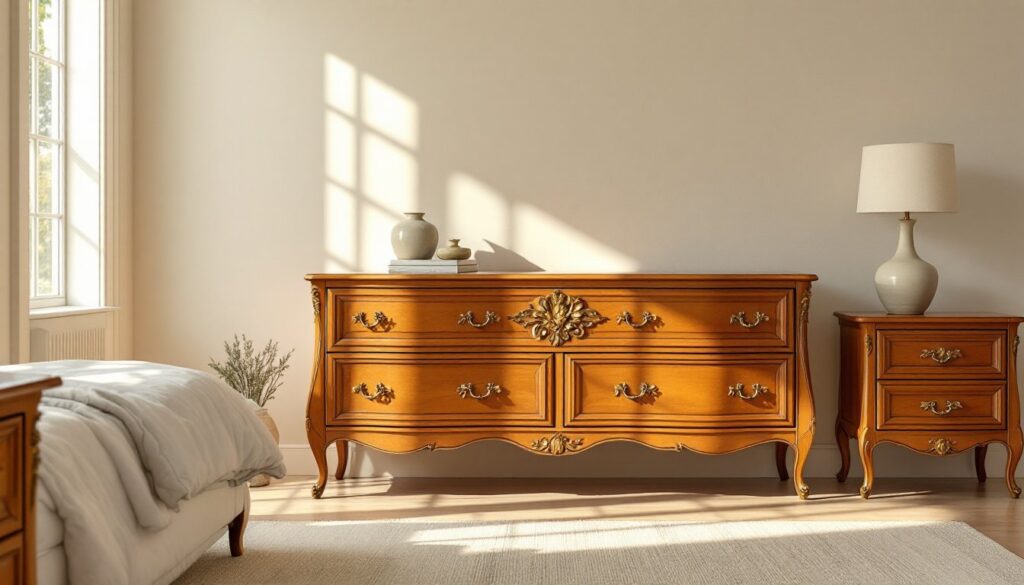
Curved lines dominate the silhouette. Drawer fronts bow outward (bombé shape), legs curve outward at the knee then taper to small feet (cabriole legs), and headboards sweep upward in gentle arcs. Nothing sits on squared-off, straight edges. Even drawer pulls mount on curved backplates.
Carved details appear in predictable spots: center drawer fronts feature floral or shell motifs, headboards display carved crests, and aprons below drawers show scrollwork. The carving isn’t deep or aggressive, it’s low-relief, meant to catch light and add visual texture without the labor intensity of hand-chiseling. Many manufacturers used router templates to create consistent patterns across production runs.
Hardware leans ornate but functional. Brass or brass-finished pulls shaped like leaves, shells, or abstract curves mount with visible screws. French Provincial rarely uses simple knobs, handles have decorative backplates. Original hardware shows wear on high-touch surfaces but shouldn’t be loose: stripped screw holes indicate replacement hardware or amateur repairs.
Finishes in the 1960s ranged from light blonde fruitwood tones to deeper cherry or walnut stains. Many manufacturers applied a glaze over the base stain, settling into carved details and grain lines to create an antiqued effect. This wasn’t distressing in the modern sense, no chains or rasps, just a darker pigment wiped into recesses for depth.
Materials and Construction Quality
Solid wood frames separate 1960s pieces from later reproductions. Run your hand under drawer fronts and along cabinet sides, you should feel real wood grain, not the papery texture of printed laminate. Top surfaces on dressers and nightstands used solid planks or book-matched veneer (two mirror-image slices from the same log) glued over plywood substrate.
Drawer construction reveals manufacturer quality. Pull a drawer completely out and flip it over. Dovetail joints, those interlocking finger-like cuts at corners, indicate better craftsmanship. English dovetails (pins visible on drawer fronts) or French dovetails (hidden pins) both outperform stapled or nailed corners. Drawer bottoms should slide into grooves routed along the sides, not sit flush-nailed underneath.
Look for drawer guides, the tracks that keep drawers sliding straight. Better pieces used center guides (a wooden runner on the drawer bottom riding in a track on the cabinet frame) or side guides with waxed wood runners. Metal roller guides appeared in some 1960s furniture but weren’t standard. Drawers should slide smoothly without binding: sticking usually means the wood has swollen from humidity or the guides are worn.
Weight tells you plenty. A 1960s triple dresser weighs 150-200+ pounds because it’s built from solid hardwood. If two people can easily carry a dresser upstairs, it’s probably particle board or hollow construction, common after 1980 but rare in the 1960s.
How to Identify Authentic 1960s French Provincial Pieces
Authentication matters when you’re paying vintage prices. Reproductions flood the market, and some manufacturers never stopped making French Provincial, making age verification trickier than with genuinely discontinued styles.
Check for manufacturer marks inside drawers, on the back panel, or underneath tops. Major makers like Dixie, Drexel, Thomasville, Bassett, and American Drew typically stamped or stenciled their name, a style number, and sometimes a production date. These stamps fade, so use a flashlight and look carefully along drawer sides and cabinet backs. No mark doesn’t mean fake, plenty of department store brands didn’t label consistently, but it makes provenance harder.
Wood species and finish application differ by era. 1960s finishes were lacquer-based or conversion varnish, applied in furniture factories with spray equipment. The finish should be smooth and even, without obvious brush marks. Modern reproductions often use polyurethane or water-based topcoats that look too perfect, no patina, no fine crackle in the finish from fifty-plus years of temperature cycling.
Hardware patina and attachment points are telling. Original brass pulls tarnish to a dull gold or greenish bronze. Replacement hardware shows shinier metal or mismatched screw holes, look for filled holes near current screws. If every piece has identical, perfectly shiny hardware, someone likely swapped it all out. That’s not a dealbreaker for functionality but affects collectible value.
Look at the back panels and drawer bottoms. Vintage pieces used unfinished plywood or hardboard for areas that don’t show. The wood darkens naturally to amber or gray over decades. Fresh, light-colored wood on backs suggests recent manufacturing or replacement parts. Drawer bottoms stamped with a date code or inspector’s mark confirm period production.
Examine wear patterns. Authentic vintage furniture accumulates specific types of wear, drawer fronts show hand oils near pulls, tops have finish wear where items were set down repeatedly, and feet show scuffs at the front edges. Missing finish in random spots or artificial distressing (gouges, paint spatters, heavy sanding on edges) indicates someone tried to “age” newer furniture. Real wear happens in predictable, high-contact areas.
Decorating Your Bedroom with 1960s French Provincial Furniture
French Provincial furniture anchors a bedroom with substantial, traditional presence. The key is balancing its curves and ornamentation without tipping into theme-park territory or fighting the style with aggressively modern elements.
Start with placement basics. These dressers and chests are wider and deeper than contemporary furniture, a triple dresser can measure 72 inches wide by 20 inches deep. You need 36 inches of clearance in front for drawers to open fully and a person to stand while dressing. Corner placement works well for tall chests: dressers often center on walls opposite the bed or flank windows.
The bed itself becomes a focal point due to the curved headboard. Position it against the longest uninterrupted wall, centered if possible. Nightstands flank the bed, but they don’t need to match the suite perfectly, mixing wood tones creates visual interest as long as styles are compatible.
Layer textiles to soften the wood’s formality. Linen or cotton duvet covers in solid colors let the furniture stay prominent. Velvet or silk accent pillows add luxury without pattern clutter. A linen blend or wool area rug (8×10 feet minimum for a queen bed) grounds the furniture and reduces echo in rooms with hardwood or laminate flooring.
Wall treatments should complement, not compete. Soft neutrals, warm whites, beiges, pale grays, provide a backdrop that highlights the wood grain and carving. If you prefer color, consider dusty blues, sage greens, or muted lavenders that echo historical palettes without going full vintage. Wallpaper works if the pattern is subtle: large-scale modern graphics clash with the furniture’s curves.
Color Palettes and Complementary Decor
Classic pairings lean into soft, romantic tones that designers often recommend for traditional bedrooms. Ivory, cream, and antique white create a French countryside feel without feeling sterile. Pair these with deeper accent colors, burgundy, forest green, or navy, in small doses through pillows, lampshades, or artwork.
Modern interpretations mix periods deliberately. Blush pink or charcoal gray walls provide contemporary contrast to honey-toned wood. Black-and-white photography in simple frames keeps walls from feeling too sweet. A geometric rug in muted colors bridges traditional furniture and modern sensibility.
Metallics tie the room together. Since most French Provincial hardware is brass or gold-toned, repeating that finish in light fixtures, mirrors, and picture frames creates cohesion. Brushed brass or antique gold matches the aged patina better than shiny, bright brass. If your hardware has been replaced with nickel or pewter, adjust your accent metals accordingly.
Avoid matchy-matchy lampshades and bedding. Identical lamps on both nightstands feel dated, mix similar but not matching styles. Skip the ruffled, busy bedding that furniture stores paired with these sets in the 1980s. Simple, high-quality textiles let the furniture’s craftsmanship shine. Think tailored, not frilly.
Incorporate practical modern elements without apology. A sleek LED reading lamp with adjustable arm beats a purely decorative vintage lamp that doesn’t provide task light. Wall-mounted USB charging stations solve modern needs without clashing, they’re small enough to stay invisible. You’re decorating a bedroom you’ll actually live in, not staging a museum exhibit.
Where to Find and What to Pay for Vintage Pieces
The market for 1960s French Provincial sits in a strange spot, too common to command high antique prices, but too well-made to be dismissed as junk. Pricing varies wildly based on condition, maker, region, and current home decor trends.
Estate sales and auctions offer the best deals, especially in regions where this furniture was popular originally (Southeast, Midwest, California suburbs). Complete bedroom sets occasionally sell for $300-800 if the estate executor just wants items gone. Individual pieces range from $75 for a nightstand to $400 for a triple dresser in excellent condition. Arrive early, serious buyers claim best pieces within the first hour.
Facebook Marketplace and Craigslist list dozens of sets at any given time. Prices run $200-1,200 for multi-piece sets, depending on condition and whether the seller understands vintage value. Look for listings with poor photos and vague descriptions, motivated sellers who don’t realize what they have will price low. Always inspect in person: photos hide veneer damage, missing hardware, and musty smells from basement storage.
Antique malls and consignment shops mark up 30-50% over estate sale prices but offer vetted condition and some return policies. A refinished dresser at a booth might run $450-650. You’re paying for convenience and the dealer’s restoration work. Ask whether the piece has been refinished: original finish in good shape is preferable to a sloppy refinish job.
High-end pieces from marquee makers, especially Drexel Touraine or Thomasville’s French Provincial lines, command premium prices, sometimes $800-1,500 for a single dresser. These justify higher costs with superior joinery, real marble tops on some pieces, and better proportions.
Condition affects value significantly. Pieces needing refinishing typically sell for 40-60% less than those with original finish in good condition. A triple dresser with water damage, scratched tops, or missing hardware might list for $150-250, which makes sense if you’re prepared to invest time and materials in restoration.
Red flags that justify walking away: sticky drawers that won’t open (indicates severe moisture damage or broken guides), large areas of missing veneer (expensive to repair properly), strong smoke or mildew odors (nearly impossible to eliminate from porous wood), and cracked or split solid wood components (structural issues).
Negotiation works, especially for multi-piece purchases. Offer 20-30% below asking for sets, higher if you’re buying everything and hauling it yourself same-day. Cash talks. Sellers often accept lowball offers on the final day of an estate sale rather than deal with removal.
Factor in transportation. A triple dresser doesn’t fit in a sedan. You’ll need a pickup truck, cargo van, or furniture trailer. Many sellers won’t help load. Bring moving blankets, ratchet straps, and a dolly. Professional furniture movers charge $100-200+ for local pickup and delivery. Budget for this before you commit to a purchase two counties away.