Art Deco furniture brings bold geometry, luxurious materials, and Jazz Age glamour into modern homes. Born in the 1920s and 30s, this design movement blends industrial precision with opulent finishes, think lacquered wood, chrome accents, and velvet upholstery. Unlike the ornate Victorian era or minimalist mid-century modern, Art Deco sits at the intersection of craftsmanship and machine-age aesthetics. For homeowners looking to recreate this style, understanding authentic materials, proportions, and period-correct details makes the difference between a cohesive space and a costume party. This guide covers what defines Art Deco furniture, essential pieces, material choices, and where to source quality items in 2026.
Table of Contents
ToggleKey Takeaways
- Art Deco living room furniture is defined by bold geometric forms, symmetrical designs, luxurious materials like lacquered wood and chrome accents, and high-gloss finishes that distinguish it from Victorian or minimalist styles.
- Essential Art Deco living room furniture pieces include low-profile velvet sofas with tapered wooden legs ($1,200–$4,500), tiered or mirrored coffee tables with geometric metal bases, and club chairs with barrel-back or chrome frame designs.
- Authentic Art Deco materials must include quality hardwoods (Macassar ebony, burled walnut, zebrawood), polished metals (chrome, brass, nickel), and period-correct fabrics like dense velvet and smooth leather in deep jewel tones.
- Create a successful Art Deco living room by anchoring one hero piece, using deliberate symmetry with matching pairs, layering contrasting textures and finishes, and selecting warm diffused lighting with geometric fixtures.
- When sourcing Art Deco furniture, choose between authenticated antiques from reputable dealers, quality reproductions with solid wood frames ($800–$3,000), custom commissions ($2,500–$7,000+), or estate sales, but avoid particle board and plastic trim marketed as authentic pieces.
What Defines Art Deco Living Room Furniture?
Art Deco furniture is recognizable by its geometric forms, symmetrical designs, and rich material contrasts. Pieces feature stepped profiles, sunburst motifs, chevron patterns, and streamlined curves that echo skyscrapers and ocean liners of the era. Unlike Art Nouveau’s organic lines, Art Deco embraces angular shapes, trapezoids, zigzags, and tiered silhouettes.
Key characteristics include:
- Bold, symmetrical geometry: Furniture often uses mirrored layouts, stepped corners, and repeating patterns.
- Luxe materials: Exotic woods (ebony, zebrawood, burl walnut), polished metals (chrome, brass, nickel), and glass are standard.
- High-gloss finishes: Lacquered surfaces, French polish, and mirrored panels create reflective, glamorous appeal.
- Ornamental details: Inlays of mother-of-pearl, ivory (now reproduced ethically), or contrasting wood veneers add visual interest.
Authentic Art Deco isn’t subtle. Pieces make statements through proportion and finish quality rather than excessive carving. If you’re comparing styles, Art Deco sits between the heavy ornamentation of Victorian and the restraint of Bauhaus. Furniture from this period was designed for urban apartments and hotel lobbies, so scale tends toward compact footprints with dramatic visual weight.
Essential Art Deco Furniture Pieces for Your Living Room
Sofas and Seating
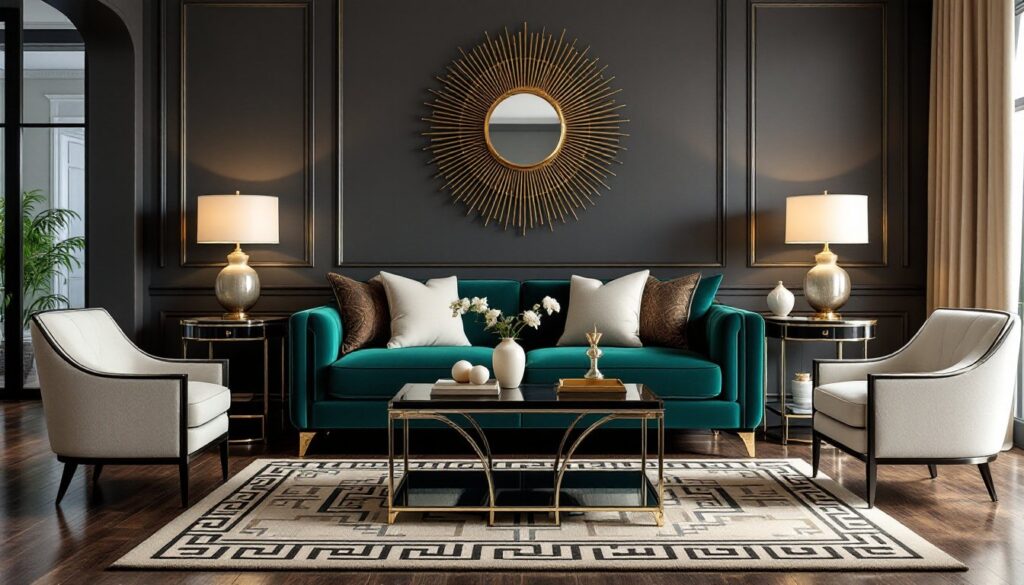
Art Deco sofas typically feature low, horizontal profiles with clean lines and plush upholstery. Look for curved backs, rolled arms, or geometric tufting in materials like velvet, mohair, or leather. Colors lean toward jewel tones, emerald, sapphire, ruby, or neutral creams and grays with metallic piping.
When shopping, check that the frame uses hardwood construction (maple or oak) rather than particle board. Period-correct pieces often have tapered wooden legs in ebonized or lacquered finishes, sometimes tipped with brass or chrome ferrules. Modern reproductions may use engineered wood: if buying vintage, inspect joints for stability and reupholstery needs. Budget $1,200–$4,500 for quality reproductions, more for authenticated antiques (prices vary widely by region and provenance).
Club chairs and armchairs pair well with Art Deco sofas. Look for barrel-back designs, wingback styles with geometric pleating, or low-slung lounge chairs with chrome frames. Seating should feel substantial but not bulky, think compact luxury, not overstuffed recliners.
Coffee Tables and Side Tables
Art Deco coffee tables emphasize horizontal layers and reflective surfaces. Common designs include:
- Tiered tables: Two or three levels in contrasting materials (black lacquer base, glass top, chrome trim).
- Mirrored or glass tops: Often paired with geometric metal bases in chrome, brass, or nickel.
- Waterfall edges: Smooth, rounded corners that flow from top to leg in a single veneered piece.
Dimensions typically range from 40–50 inches long for a standard sofa pairing. Height should be 16–18 inches to align with seat cushions. Avoid overly thick or chunky legs: Art Deco favors sleek metal supports or tapered wood.
Side tables and end tables follow similar rules but in smaller scale. Nesting tables in graduated sizes were popular during the period and remain practical for flexible layouts. Many designs from the interior design resource showcase how these tables anchor seating arrangements without visual clutter. Look for round, hexagonal, or octagonal tops, circles and polygons appear frequently in Art Deco motifs.
How to Choose Authentic Art Deco Materials and Finishes
Material quality separates convincing Art Deco from cheap imitation. Period pieces used the finest available materials, and reproductions should follow suit.
Wood choices:
- Macassar ebony: Dark, striped hardwood with dramatic grain. Expensive and often veneered over less costly substrates.
- Burled walnut or maple: Swirling, knotted grain patterns that create visual texture.
- Zebrawood: High-contrast striping in tan and dark brown.
- Lacquered finishes: Piano-black or deep jewel tones applied in multiple coats and buffed to a mirror shine.
If buying vintage, inspect veneers for lifting or cracking, common issues in pieces over 80 years old. Repairs are possible but factor into cost. For new pieces, ask if veneers are real wood or printed laminates: the latter won’t hold up or refinish well.
Metals and accents:
- Chrome plating: Period-correct for table bases, drawer pulls, and trim. Should be polished, not brushed or antiqued.
- Brass and bronze: Used for hardware, inlays, and decorative banding. Unlacquered brass will patina: lacquered finishes stay bright.
- Nickel and aluminum: Less common but appearing in streamlined or “Machine Age” pieces.
Upholstery fabrics:
- Velvet: High pile, dense weave. Mohair velvet was premium in the 1920s.
- Leather: Smooth, dyed hides in deep colors. Avoid distressed or “vintage” finishes, Art Deco favored pristine surfaces.
- Silk and satin: For accent pillows or less-used seating. Delicate but period-accurate.
When sourcing materials for reupholstery or custom builds, request fabric samples to check density and drape. Art Deco fabrics should feel heavy and luxurious, not flimsy. For example, contemporary stylish furniture options often incorporate similar tactile qualities that echo the era’s emphasis on touch and finish.
Styling Your Art Deco Living Room: Practical Design Tips
Art Deco thrives on contrast, symmetry, and controlled opulence. A successful living room balances bold statements with functional layout.
Start with a focal point. Anchor the room around one showpiece, a lacquered credenza, a velvet sofa, or a geometric mirror. Art Deco interiors often feature one or two hero pieces rather than wall-to-wall theme park decor.
Use symmetry deliberately. Flank a sofa with matching side tables and lamps. Pair club chairs on either side of a fireplace. Symmetry creates visual order and echoes the movement’s architectural roots. But, don’t make every element identical, vary heights and finishes to avoid monotony.
Layer textures and finishes. Combine matte and glossy surfaces: a velvet sofa against a lacquered coffee table, a shaggy rug under chrome-legged chairs. Art Deco designs featured in modern Art Deco apartments demonstrate how contrasting materials add depth without clutter.
Lighting is critical. Art Deco fixtures often use frosted glass globes, tiered shades, or geometric metalwork. Wall sconces, table lamps, and floor lamps should echo the furniture’s lines, no rustic farmhouse fixtures or bohemian rattan. Aim for warm, diffused light rather than stark LEDs: dimmers help control ambiance.
Color palette options:
- Classic glam: Black, white, gold, and silver with pops of emerald or ruby.
- Soft deco: Cream, blush pink, mint green, and champagne gold.
- Bold jewel tones: Sapphire blue, amethyst purple, jade green.
Walls can be neutral (cream, gray, taupe) or dramatic (charcoal, navy, deep green). If going bold, keep large furniture pieces in complementary neutrals to avoid visual overload.
Rugs and flooring: Geometric patterns in wool or silk. Consider borders, Greek key motifs, or stylized florals. Hardwood floors in dark stains (walnut, ebony) suit the style: if working with existing flooring, area rugs define the seating zone. Avoid overly distressed or shabby-chic finishes.
Accessories: Limit clutter. Art Deco rooms display a few statement pieces, sculptural bookends, a sleek bar cart, a sunburst mirror, rather than collections of knickknacks. Think quality over quantity.
Where to Find Art Deco Living Room Furniture in 2026
Sourcing Art Deco furniture requires a mix of patience, research, and budget flexibility. Options range from authenticated antiques to well-executed reproductions.
Antique dealers and auctions: For authenticated period pieces, work with reputable dealers specializing in 20th-century design. Expect to pay premiums for provenance and condition. Auctions (live and online) can yield finds, but inspect photos carefully for veneer damage, structural issues, or non-original hardware. Restoration costs can add 20–40% to purchase price.
Reproduction furniture retailers: Many manufacturers produce Art Deco-inspired pieces using modern materials and construction. Quality varies widely. Check for solid wood frames, metal-on-metal joinery (not plastic clips), and hand-applied finishes. Read reviews for durability feedback. Prices typically range $800–$3,000 per major piece.
Custom furniture makers: If you have specific dimensions or material preferences, commission work from a craftsperson experienced in period styles. Provide reference images and material samples. Custom builds cost more upfront but ensure fit and finish quality. Budget $2,500–$7,000+ depending on complexity.
Vintage and consignment shops: Mid-range options often appear in consignment stores, estate sales, or online marketplaces. Inspect in person when possible. Look for maker’s marks, solid construction, and original finishes. Many pieces will need reupholstery or refinishing, factor those costs into your budget.
Online resources: Platforms like Homedit offer inspiration and vendor directories for sourcing materials and furniture. Filter searches by decade, style, and material to narrow options. Be cautious of overseas reproductions with vague descriptions, request detailed photos and measurements.
What to avoid: Particle board frames marketed as “Art Deco-inspired,” plastic trim masquerading as chrome, and anything described as “shabby chic Art Deco” (contradictory styles). If buying vintage, steer clear of pieces with significant structural damage, missing veneers, or amateur repairs unless you have restoration skills or budget.
For homeowners exploring broader furniture styles and layouts, comparing Art Deco against other periods helps clarify what fits your space and skill level. Whether you commit to full period authenticity or blend Art Deco accents with contemporary pieces, prioritize quality materials and proportional design over theme-heavy gimmicks.