Adirondack chairs are instantly recognizable, the wide arms, the reclined back, the contoured seat that makes you want to settle in with a cold drink and stay awhile. They’ve been a staple of porches and patios for over a century, and in 2026, they’re still one of the most practical and comfortable outdoor seating options available. Whether someone’s building their first deck or upgrading worn-out furniture, understanding the materials, styling options, and upkeep requirements can make the difference between a piece that lasts two seasons and one that becomes a backyard fixture for decades.
Table of Contents
ToggleKey Takeaways
- Adirondack patio furniture features a reclined backrest (20–30 degrees) and wide armrests, providing natural comfort for extended outdoor sitting without cushions.
- Cedar is the most popular material for DIY Adirondack chairs at $80–140 per chair, while poly lumber offers low-maintenance alternatives that last 20+ years despite higher upfront costs.
- Arrange Adirondack chairs 36–48 inches apart with side tables for conversation zones, and position them toward views rather than facing the house for optimal patio design.
- Cedar and teak require annual inspections and sealant reapplication every 2–3 years, while poly lumber needs only soap-and-water cleaning and annual fastener checks.
- Proper maintenance—including stainless steel fasteners, light sanding before resealing, and winter storage—extends Adirondack furniture lifespan to 15–30 years depending on material choice.
What Is Adirondack Patio Furniture?
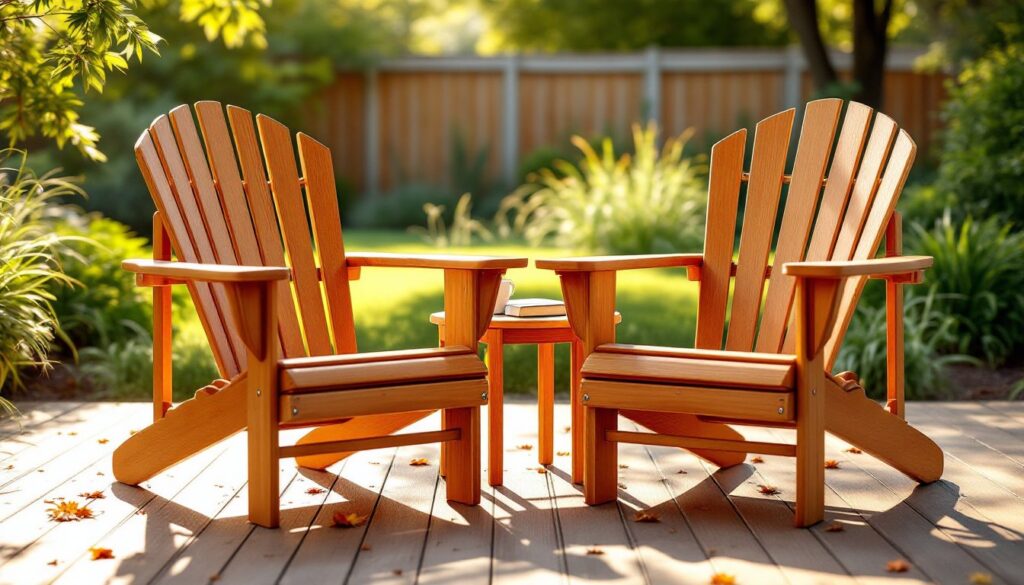
Adirondack furniture originated in the early 1900s in Westport, New York, in the Adirondack Mountains. Thomas Lee designed the first version in 1903 while looking for comfortable outdoor seating for his summer home. The original design featured eleven flat wooden boards and a contoured seat that distributed weight across the sitter’s back and legs.
Today’s Adirondack chairs retain that signature silhouette: a wide, flat armrest ideal for holding drinks or books, a steeply reclined backrest (usually angled between 20–30 degrees), and a low seat height (typically 13–15 inches from the ground). Most designs include a slatted back and seat for water drainage and air circulation.
The term “Adirondack furniture” extends beyond chairs to include matching side tables, loveseats, ottomans, and rocking chairs. All share the same design language: broad proportions, angled comfort, and construction methods that prioritize durability in outdoor conditions. Some modern interpretations add contoured backs or curved armrests, but the core geometry remains consistent with the original Adirondack design developed over a century ago.
Why Choose Adirondack Furniture for Your Outdoor Space
Adirondack furniture solves several common patio problems at once. The reclined seating position takes pressure off the lower back, making it genuinely comfortable for extended sitting, no cushions required, though many people add them anyway. The wide armrests double as side tables, eliminating the need for extra furniture in tight spaces.
The low center of gravity makes these chairs exceptionally stable. They don’t tip easily on uneven ground or in moderate wind, a real advantage for exposed decks or hillside patios. The slatted construction allows rain to drain through instead of pooling, so the furniture dries quickly after storms.
From a practical standpoint, Adirondack designs are DIY-friendly. The joinery is straightforward, most plans use basic butt joints, screws, and wood glue. A competent DIYer with a circular saw, drill, and sander can build a serviceable chair in a weekend. Plans are widely available, and the material list is short: roughly 20–25 board feet of 1×4 and 1×6 stock for a single chair.
Adirondack furniture also plays well with various design styles. The clean lines suit modern spaces, while the rustic construction fits farmhouse and cottage aesthetics. Many country-style patios pair Adirondack chairs with gravel paths and raised garden beds for a cohesive look.
Best Materials for Adirondack Patio Furniture
Material choice determines maintenance requirements, lifespan, and cost. Each option has trade-offs worth weighing before purchasing or building.
Wood: Cedar, Teak, and Pine Options
Western red cedar is the most popular wood for DIY Adirondack chairs. It contains natural oils that resist rot and insect damage, and it weathers to a silvery gray if left untreated. Cedar is lightweight (about 23 pounds per cubic foot) and easy to cut, drill, and sand. Expect to pay $4–7 per board foot depending on grade and region. A single chair requires about $80–140 in materials.
Cedar needs no finish for outdoor use, but applying a UV-protective sealant every 2–3 years maintains the original color. Without treatment, the wood remains structurally sound but develops a weathered patina.
Teak offers superior longevity, 30+ years outdoors, but costs $18–25 per board foot, making a single chair a $400+ material investment. Teak’s high oil content prevents rot even in constant moisture. It also weathers to gray unless treated with teak oil annually.
Pressure-treated pine is the budget option at $2–4 per board foot. Modern alkaline copper quaternary (ACQ) treatment protects against decay and termites. But, treated pine is heavier, prone to warping as it dries, and requires painting or staining to prevent surface checking. Let treated lumber dry outdoors for 3–6 months before finishing.
All wood Adirondack chairs should use stainless steel or coated deck screws to prevent rust stains. Galvanized fasteners will corrode over time, especially in coastal areas.
Poly Lumber and Recycled Plastic
High-density polyethylene (HDPE) lumber, often called poly lumber, is made from recycled milk jugs and detergent bottles. It won’t rot, splinter, crack, or need painting. Most manufacturers offer 20–25 year warranties against material defects.
Poly lumber comes in standard dimensional sizes (1×4, 1×6, etc.) and can be cut and fastened like wood. But, it’s heavier (about 65 pounds per cubic foot) and more flexible, requiring closer stud spacing and thicker stock for structural elements. Use stainless steel screws and pre-drill holes to prevent cracking.
The biggest drawback is aesthetics. Even high-quality poly lumber doesn’t replicate wood grain convincingly. It also expands and contracts significantly with temperature changes, a 10-foot board can shift ¼ inch between winter and summer. Leave ⅛-inch gaps between boards to accommodate movement.
Poly lumber chairs cost $200–500 retail, roughly double the price of comparable cedar models. The material itself runs $3–6 per linear foot for DIY builds. For homeowners seeking truly low-maintenance patio furniture, poly lumber delivers on that promise even though the upfront cost.
How to Style Adirondack Chairs in Your Patio Design
Adirondack chairs work best when arranged for conversation or views, not lined up like theater seating. Place two chairs 36–48 inches apart with a small side table between them to create a natural conversation zone. This spacing allows people to talk comfortably without shouting or leaning.
For fire pits or outdoor fireplaces, arrange four to six chairs in a semi-circle with 24–30 inches between armrests. This configuration maintains sight lines to the fire while keeping everyone within conversational range. Always position chairs at least 3 feet from open flames for safety.
On covered porches, angle chairs toward the yard or street view rather than facing the house. Adirondack chairs’ reclined backs make them ideal for watching activity, kids playing, garden views, or sunset angles. Many Southern-style porches use this arrangement to create an outdoor “room” that functions as an extension of indoor living space.
Color choice impacts visual weight. Natural wood tones blend into garden settings and suit traditional homes. Painted chairs in bold colors (navy, forest green, barn red) create focal points and suit cottage or coastal themes. White or light gray works well in modern or minimalist spaces but shows dirt quickly.
For poolside or lakefront settings, choose lighter colors that don’t absorb as much heat. Dark-stained wood or black poly lumber can reach uncomfortable surface temperatures in direct sun, hot enough to burn exposed skin in summer heat.
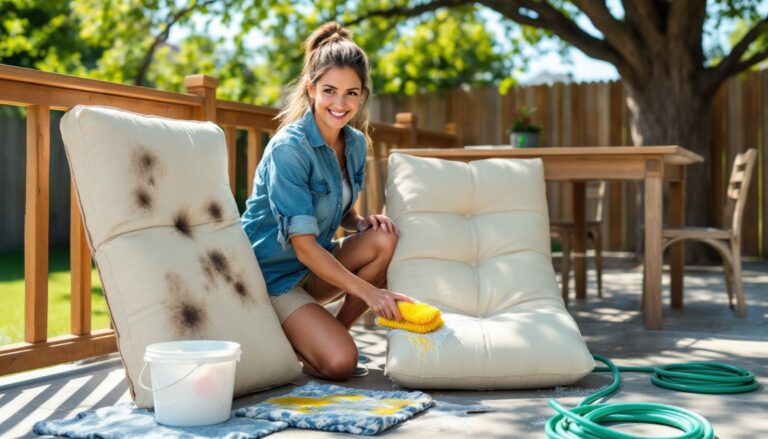
Add outdoor-rated cushions (4–5 inches thick) if comfort matters more than the chair’s minimalist aesthetic. Look for cushions with drainage grommets and solution-dyed acrylic fabric (like Sunbrella), which resists fading and mildew. Store cushions indoors during extended rain to prolong their life.
Maintenance Tips to Keep Your Adirondack Furniture Looking New
Maintenance requirements depend entirely on material choice. Here’s what each type needs:
Cedar and untreated wood: Hose off dirt and pollen monthly during active seasons. For stubborn grime, scrub with a soft brush and a solution of 1 part white vinegar to 3 parts water. Avoid pressure washers, they damage wood fibers and accelerate weathering.
If preserving color matters, apply a UV-blocking sealant every 2–3 years. Products containing trans-oxide pigments (like Messmer’s UV Plus or TWP 1500 series) block UV rays without hiding grain. Sand lightly with 120-grit paper before reapplying to ensure adhesion.
Check all fasteners annually. Wood shrinks and expands with humidity changes, which can loosen screws. Tighten any that show movement, and replace rusted hardware with stainless steel or coated deck screws.
Painted wood: Wash with mild dish soap and water. Touch up chips immediately to prevent moisture infiltration. Most latex exterior paints need a full repaint every 4–6 years depending on sun exposure. Sand any areas with peeling paint down to bare wood, prime with an oil-based primer, then apply two coats of 100% acrylic latex paint.
Poly lumber: Clean with soap and water or a diluted bleach solution (1 cup bleach per gallon of water) for mildew stains. Poly lumber doesn’t need sealing, staining, or painting. Inspect fasteners annually, the material doesn’t rot, but loose screws can still develop over time.
For all materials, store chairs indoors or cover them during winter in regions with freeze-thaw cycles. Even rot-resistant materials benefit from protection against ice formation in joints and fastener holes. If storage isn’t possible, tip chairs forward at a 30-degree angle to shed snow and prevent water from pooling in the seat.
Replace any chair showing structural cracks in load-bearing joints or significant sagging in the seat. These are safety issues, not cosmetic problems. Wood chairs typically last 15–25 years with proper care: poly lumber can exceed 30 years in most climates.
For homeowners hunting for deals, patio furniture clearance sales in late summer often include Adirondack chairs at steep discounts. With proper maintenance, even a clearance find can provide decades of reliable outdoor seating.