Concrete patio furniture has moved way past those drab park benches and bus-stop tables. In 2026, cast and molded concrete pieces are showing up in designer backyards, rooftop patios, and poolside lounges, and for good reason. It’s heavy enough to stay put in wind storms, can handle freeze-thaw cycles better than most materials, and offers a sculptural look that ranges from minimalist modern to industrial farmhouse. Whether someone’s furnishing a small balcony or a sprawling deck, concrete brings weight, texture, and staying power that lighter materials can’t match.
Table of Contents
ToggleKey Takeaways
- Concrete patio furniture offers superior durability, resisting UV damage, freeze-thaw cycles, and corrosion better than wood, metal, or resin alternatives.
- The weight of concrete furniture provides built-in stability, preventing tipping in wind and theft, making it ideal for exposed patios and rooftop decks.
- Concrete pieces require minimal maintenance—just occasional cleaning and sealing every two to three years—compared to annual upkeep needed for teak or aluminum.
- Design flexibility allows concrete patio furniture to transition between modern minimalist and rustic farmhouse styles through polished, exposed-aggregate, and acid-stained finishes.
- DIY concrete projects cost $75–$150 in materials for basic pieces, while store-bought options range from $150 to $3,000+ depending on design complexity and customization.
- Regular sealing, prompt stain removal, and crack repair keep concrete furniture in excellent condition for decades, maximizing long-term outdoor living value.
Why Choose Concrete Patio Furniture for Your Outdoor Space?
Durability is the headline feature. Properly sealed concrete resists moisture infiltration, UV degradation, and temperature swings that warp wood or crack resin. In coastal zones, it won’t corrode like bare steel. In mountain climates, it tolerates snow load and ice without splintering.
Weight acts as built-in stability. A concrete bench weighing 150–300 pounds won’t tip over in a gust or get stolen from the yard. This makes it ideal for open sites, rooftop decks, or anywhere wind is a factor. No need for sandbags or tie-downs.
Low maintenance keeps upkeep minimal. Unlike teak that needs annual oiling or aluminum that pits over time, concrete just needs occasional cleaning and a fresh coat of sealer every two to three years. Most stains, mud, pollen, even rust drips from planters, come off with a stiff brush and soapy water.
Design flexibility is broader than many assume. Modern concrete furniture comes in smooth, polished finishes, exposed-aggregate textures, acid-stained colors, and even lightweight fiber-reinforced variants. It pairs well with cushions, wood accents, or metal frames. The material reads as contemporary in one setting and rustic in another, depending on finish and form.
Types of Concrete Patio Furniture to Consider
Concrete Benches and Seating Options
Backless benches are the workhorse. They double as extra seating during gatherings and as low tables for trays or planters. Standard dimensions run 48–72 inches long, 14–18 inches wide, and 16–18 inches high, close to standard chair-seat height. Look for cast pieces with internal rebar or wire mesh reinforcement to prevent cracking under load.
Backed benches and chairs add comfort but weigh more, sometimes upward of 400 pounds for a two-seater. Many designs incorporate wood slat backs or cushions to soften the seating surface. If someone’s building their own, embedding galvanized anchor bolts in the pour makes it easy to attach wood or metal components later.
Modular seating blocks offer flexibility. Square or rectangular units can be arranged in L-shapes,围成circles, or stacked as planters when not in use. They’re popular with designers leaning toward an industrial aesthetic, as highlighted in modern outdoor furniture trends focused on minimalist styling.
Concrete Tables for Dining and Entertaining
Dining tables typically feature a concrete top on steel or wood legs, or a full-pour pedestal base. Tops range from 1.5 to 3 inches thick. Thicker slabs look more substantial but add serious weight, a 6-foot table with a 3-inch top can exceed 500 pounds. Plan lifting and placement before the pour if going DIY. Some commercial models use glass-fiber-reinforced concrete (GFRC), which cuts weight by 30–40% without sacrificing strength.
Coffee and side tables work well in full concrete because their smaller footprint keeps weight manageable, usually 75–150 pounds. Round or square tops, 24–36 inches across, pair with cube or cylinder bases. Sealed concrete resists water rings from sweating glasses, so they’re practical for poolside or uncovered patios.
Fire pit tables combine concrete tops with built-in propane or natural-gas burners. The concrete acts as a heat shield and provides a wide ledge for drinks and plates. Check local codes: some jurisdictions require a 10-foot clearance from structures and specify burner BTU limits. These tables often include lava rock or fire glass in the burner well for aesthetics and heat distribution.
How to Style Concrete Furniture in Your Outdoor Design
Soften with textiles. Concrete’s hard lines and cool tone benefit from cushions, outdoor rugs, and throw pillows in warm colors or natural fibers. Weather-resistant fabrics, Solution-dyed acrylic or polyester blends rated for 1,000+ hours of UV exposure, hold up better than cotton. Cushions also add necessary comfort: sitting directly on concrete for extended periods isn’t pleasant.
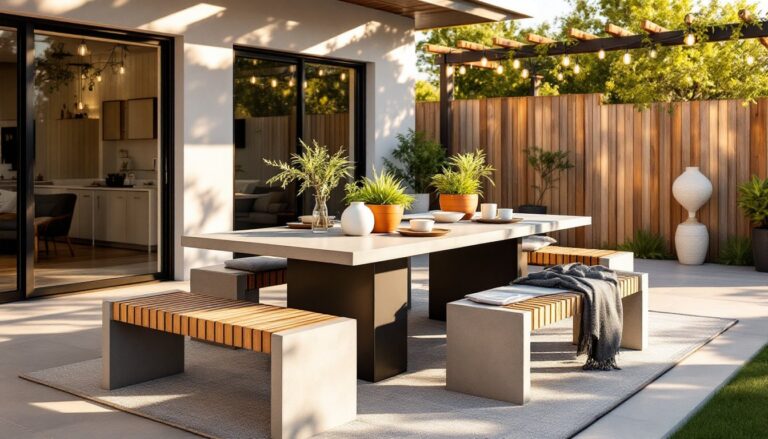
Layer materials. Pairing concrete with wood, metal, or stone creates contrast. A concrete table with cedar benches, or a concrete bench flanked by potted olive trees in terracotta, breaks up the monolithic feel. Many homeowners combine various patio furniture materials to balance durability with visual warmth.
Use lighting. Concrete furniture looks best when shadows and highlights define its texture. Low-voltage LED strip lights under bench edges or uplights behind a seating wall add drama after dark. Solar path lights nearby work too, though wired fixtures offer better control and brightness.
Incorporate greenery. Concrete’s neutral gray or tan tones make a clean backdrop for plants. Trailing vines, ornamental grasses, or potted succulents soften edges. If the furniture includes planter cutouts, use them, just line with landscape fabric to prevent soil from leaching stains onto the concrete.
Match the finish to the setting. Polished concrete suits modern, minimalist spaces. Exposed aggregate or broom-finish textures fit rustic or farmhouse styles. Acid-stained or integral color can tie furniture to home exteriors or hardscape. Many contemporary outdoor designs lean into monochromatic palettes where concrete anchors the color scheme.
Maintenance Tips to Keep Your Concrete Furniture Looking New
Seal on a schedule. Apply a penetrating silane or siloxane sealer within 30 days of curing if the piece is new, then reapply every two to three years. Topical acrylic sealers offer a glossy finish but require reapplication annually and can peel if moisture gets underneath. Read the product label, some sealers aren’t compatible with previously treated surfaces.
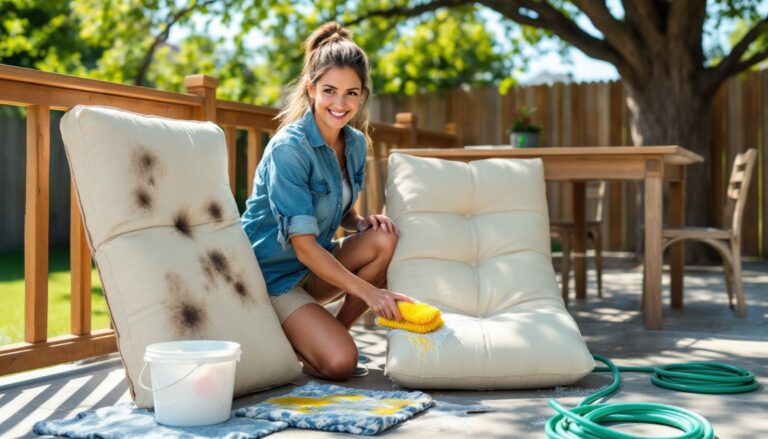
Clean regularly. Hose off dust and debris weekly. For stuck-on grime, use a stiff nylon brush (not wire, which can scratch) and mild dish soap. Avoid acidic cleaners like vinegar or citrus-based formulas: they can etch the surface and dull the sealer. For organic stains, algae, moss, or mildew, a diluted bleach solution (1 part bleach to 10 parts water) works, but rinse thoroughly afterward.
Address cracks early. Hairline cracks are cosmetic and common in concrete. For anything wider than ⅛ inch, use a concrete crack filler or epoxy injection kit. Clean the crack with a wire brush, blow out dust with compressed air, then apply filler per manufacturer instructions. This prevents water infiltration that can worsen the crack during freeze-thaw cycles.
Protect from stains. Even sealed concrete can stain if spills sit too long. Wipe up oils, wine, rust, and fertilizer promptly. If rust stains appear (often from metal planters or tools), try a commercial rust remover rated for concrete, or make a poultice with baking soda and water, apply, cover with plastic, and let sit for 24 hours before scrubbing.
Mind the seasons. In freezing climates, avoid using de-icing salts directly on concrete furniture: calcium chloride and rock salt can cause surface spalling. Use sand for traction instead. In summer, covering pieces with breathable furniture covers during extended vacancies helps reduce UV exposure and keeps surfaces cleaner.
DIY vs. Store-Bought: Which Concrete Patio Furniture Is Right for You?
DIY concrete furniture appeals to builders who want custom dimensions or a unique design. The material cost is low, a 60-pound bag of high-strength concrete mix runs $6–$10, and a simple bench might need four to six bags. Add rebar, wire mesh, release agent, sealer, and forms (melamine-coated particleboard or plywood), and a basic bench costs $75–$150 in materials.
Tools required include a wheelbarrow or mixing tub, a drill with paddle mixer (hand-mixing is exhausting and yields inconsistent results), a level, trowels, and a vibrating sander or concrete vibrator to remove air pockets. If someone already owns these, the barrier to entry is low. If not, factor in tool rental or purchase.
Challenges include weight and curing time. A poured bench weighing 200+ pounds is difficult to move solo: plan to build in place or recruit help. Concrete takes 28 days to reach full strength, though it can be demolded in 24–48 hours with proper curing (keeping the surface moist with plastic sheeting or wet burlap). Mistakes, uneven surfaces, voids, or spalling, are hard to fix and often require a complete re-pour.
Store-bought options save time and reduce risk. Manufactured pieces come pre-sealed, often with reinforcement already embedded. Prices vary widely: simple benches start around $150, dining tables range from $600 to $2,000+, and high-end GFRC designs can exceed $3,000. Shoppers comparing clearance patio deals may find concrete pieces heavily discounted at season’s end, especially bulky items retailers don’t want to store.
Shipping and delivery are key considerations. Most retailers charge $100–$300 for curbside delivery on heavy concrete items. White-glove service (delivery to the backyard) costs more. Some retailers offer local pickup, which works if someone has a truck and a helper.
When to go DIY: If the project involves simple shapes (benches, rectangular tables), and there’s access to tools and at least one helper, DIY can yield excellent results at half the cost of retail. It’s also the only way to achieve truly custom dimensions or embedded features like planter boxes or fire-pit cutouts.
When to buy: For complex designs, curved or sculptural forms, or if time and physical effort are limited, store-bought is the smarter choice. Many concrete outdoor pieces offer refined finishes and engineering that’s hard to replicate in a backyard pour.
Conclusion: Concrete patio furniture delivers long-term value through durability, low maintenance, and design versatility. Whether someone pours their own or orders a ready-made piece, the material stands up to weather, resists theft, and anchors an outdoor space with substance. With proper sealing and occasional cleaning, concrete furniture can look sharp for decades, making it one of the most practical investments for outdoor living.