Outdoor dining transforms a plain patio into a genuine extension of the home’s living space. Whether planning weekend barbecues or casual weeknight meals under the stars, the right furniture makes all the difference between a cramped folding-chair setup and a space that rivals the indoor dining room. This guide walks through the key decisions that determine whether patio furniture will hold up to sun, rain, and heavy use, or become a regrettable purchase by season two.
Table of Contents
ToggleKey Takeaways
- Quality dining patio furniture uses weather-resistant materials like powder-coated aluminum, UV-stabilized resin wicker, and marine-grade fasteners to last more than two seasons.
- Proper sizing is critical—leave at least 36 inches of clearance around your table and budget 24 inches per person to ensure comfort and functionality.
- Choose materials based on maintenance needs: teak requires annual oiling, powder-coated aluminum stays lightweight and rust-free, and poly-wood mimics wood with zero maintenance.
- Bar-height and counter-height tables offer a modern, space-efficient alternative to traditional dining sets, though they’re less suitable for long meals or elderly guests.
- Invest in solution-dyed acrylic cushions with quick-dry foam, string lighting, and weatherproof covers to extend usability and protect your outdoor dining investment.
- Test your furniture layout with painter’s tape before purchasing to confirm the arrangement doesn’t block pathways, grill access, or views.
Why Invest in Quality Dining Patio Furniture?
The gap between budget and quality outdoor furniture shows up fast. A $150 set might look fine in the store, but after one summer of UV exposure and a few rainstorms, the finish flakes, the joints loosen, and the cushions fade to a sad pastel.
Durability matters outdoors. Quality dining sets use materials engineered for weather resistance: powder-coated aluminum that won’t rust, UV-stabilized resin wicker that resists brittleness, and marine-grade stainless steel fasteners. These aren’t luxury upgrades, they’re the baseline for furniture that’ll last more than two seasons.
Comfort drives usage. A wobbly table or chairs that dig into the backs of knees don’t get used. Families end up eating indoors because the patio setup feels like temporary camping gear. Well-built furniture with proper ergonomics, stable legs, and quality cushions (that actually dry between uses) means the outdoor space becomes a go-to spot, not an afterthought.
Resale and aesthetic value. Patios with cohesive, well-maintained furniture photograph better for real estate listings and contribute to curb appeal. It’s a practical consideration for homeowners planning to sell within five to ten years.
Types of Outdoor Dining Furniture Sets
Traditional Dining Tables and Chairs
Standard-height dining sets (tables at 28–30 inches) are the workhorse of outdoor dining. They seat four to eight people comfortably and pair with stackable or stationary chairs.
Rectangular tables (typically 60–96 inches long) fit narrow patios and can be pushed against a wall when not in use. They’re the best choice for tight spaces or long, linear decks. Round and oval tables (48–72 inches diameter) encourage conversation and work well on square patios or under pergolas. They eliminate sharp corners, helpful with kids running around.
Materials vary widely. Teak and eucalyptus offer classic looks but require annual oiling to prevent silvering. Powder-coated aluminum stays lightweight and rust-free, though cheaper versions dent easily. Poly-wood (recycled plastic lumber) mimics wood grain, needs zero maintenance, and resists fading, but it’s heavy and pricey.
Chair options range from armless side chairs (easier to tuck under the table) to full armchairs (more comfortable for long meals). Stackable aluminum or resin chairs save storage space in the off-season. For cushioned seating, look for quick-dry foam cores and solution-dyed acrylic fabrics, both handle moisture better than standard polyester.
Bar-Height and Counter-Height Options
Counter-height tables (34–36 inches) and bar-height tables (40–42 inches) bring a casual, modern vibe. They’re popular for small balconies, poolside setups, and patios with views where the extra height improves sightlines.
Bar sets typically seat two to four people and take up less floor space than traditional dining sets. They pair well with high-top stools, which are easier to move than full dining chairs. The downside: they’re less comfortable for long dinners and harder for kids or elderly guests to use.
Material and stability considerations. Higher tables need wider bases or heavier frames to avoid tipping. Look for reinforced leg bracing or weighted bases. Aluminum bar sets can feel flimsy: steel or cast aluminum with a thicker gauge (14–16 gauge minimum) adds needed rigidity. Resin wicker bar sets should have internal aluminum frames, pure wicker won’t hold up at bar height.
Choosing the Right Material for Your Patio
Material choice dictates maintenance schedule, lifespan, and aesthetic.
Aluminum (powder-coated or anodized): Lightweight, rust-proof, and low-maintenance. Handles coastal humidity and chlorine exposure well. Cheaper sets use thin-gauge aluminum that dents: look for 12–14 gauge frames. Powder coating can chip if scraped, exposing bare metal, touch up with matching spray paint.
Steel (wrought iron or tubular): Heavy, stable, and traditional. Wrought iron rusts if the protective coating fails: expect to repaint every few years in humid climates. Tubular steel is lighter but still prone to surface rust. Both need covered storage or waterproof covers in winter.
Wood (teak, eucalyptus, acacia): Teak is the gold standard, naturally oily, rot-resistant, and durable for 20+ years. It weathers to silver-gray unless oiled annually. Eucalyptus and acacia cost less but need more frequent sealing (every 1–2 years). All hardwoods benefit from covered storage or furniture covers. Avoid pine or untreated softwoods, they’ll rot within a few seasons.
Resin wicker (PE or HDPE): Synthetic wicker resists UV, moisture, and mildew. Quality sets use high-density polyethylene (HDPE) woven over an aluminum frame. Check the weave tightness, loose weaves snag and unravel. Cheaper PVC wicker cracks in cold weather. Those looking for budget-friendly patio options often find resin wicker offers the best balance of price and durability.
Poly-wood (HDPE lumber): Recycled plastic that mimics wood grain. Near-zero maintenance, won’t splinter or fade, and handles full sun. It’s heavy, a single chair can weigh 40+ pounds. Expensive upfront, but the lifespan justifies the cost for permanent installations.
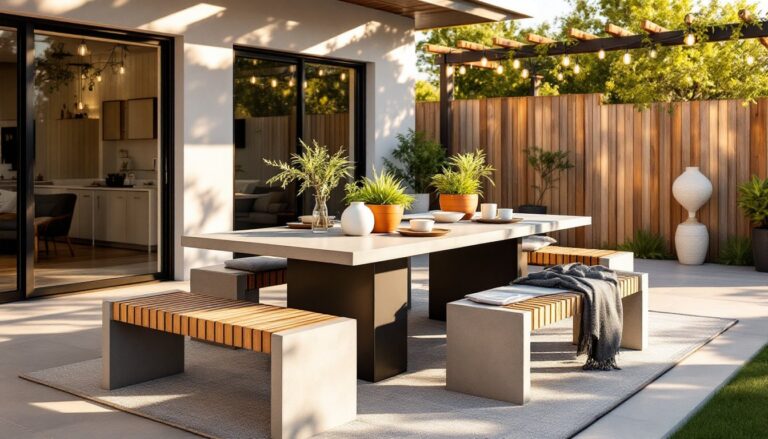
Concrete or stone: Rare for full dining sets but used for table bases or tops. Extremely durable and modern-looking. Heavy enough to require a reinforced deck or patio slab. Not suitable for rooftop decks or structures with weight limits.
How to Size Your Dining Patio Furniture
Measure the patio before shopping. A too-large table creates a cramped walkway: too-small furniture gets lost on a spacious deck.
Clearance rule: Leave 36 inches minimum between the table edge and walls, railings, or other furniture. This allows chairs to pull out and people to walk behind seated guests. For tight spaces, 24 inches works but feels snug.
Table size per person: Budget 24 inches of table width per person. A 60-inch rectangular table seats six (three per side) comfortably: 72–96 inches seats eight. Round tables are space-efficient: a 48-inch round seats four, a 60-inch seats six.
Patio dimensions and furniture fit:
- 8×10-foot patio: Seats four with a 36–48 inch round or 48×36 inch rectangular table.
- 10×12-foot patio: Seats six with a 60-inch round or 72×36 inch rectangular table.
- 12×16-foot patio or larger: Seats eight-plus with a 96-inch rectangular or 72-inch round table. Add a sideboard or bar cart without crowding.
Umbrella and shade structures: If using a table umbrella, add 6–12 inches to the table diameter for the pole base. Freestanding umbrellas or pergolas offer more flexibility. Many patio furniture arrangements incorporate built-in shade solutions.
Ceiling height for covered patios: Standard dining chairs (17–19 inches seat height) need at least 7 feet of overhead clearance. Bar-height stools add 10–12 inches to seated height: ensure covered patios or pergolas have 8+ feet clearance.
Test with tape: Before buying, outline the furniture footprint on the patio with painter’s tape. Walk around it for a few days to confirm the layout doesn’t block pathways or grill access.
Styling and Accessorizing Your Outdoor Dining Area
Functional accessories extend the usability and comfort of outdoor dining spaces.
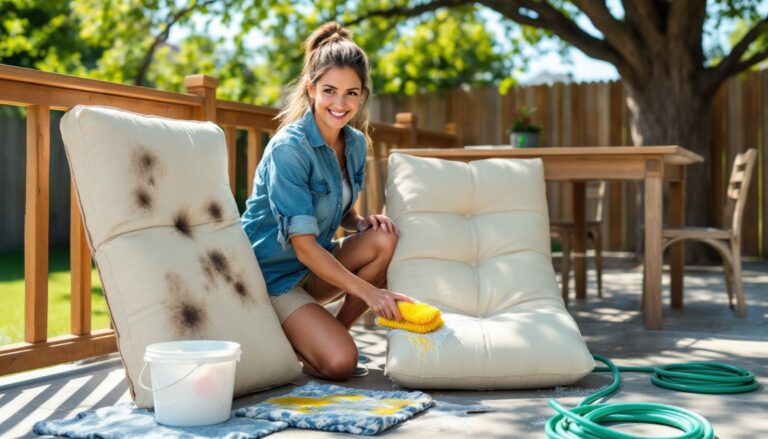
Cushions and textiles: Look for solution-dyed acrylic fabrics (brand names: Sunbrella, Outdura) with a water-repellent finish. They resist fading, mold, and mildew better than cotton or standard polyester. Quick-dry foam cores wick moisture: avoid solid foam that stays soggy for days. Store cushions indoors during heavy rain or winter.
Lighting: String lights (Edison bulbs or LEDs) add ambiance without taking up table space. Mount them overhead on pergolas, fences, or poles. Solar-powered options skip the wiring but give dimmer light. Table lanterns (battery or solar) provide task lighting for evening meals. Avoid candles in windy areas, they’re a nuisance and a fire risk near umbrellas or cushions. Homeowners seeking creative outdoor setups often combine multiple light sources for layered evening ambiance.
Tableware and serving: Melamine or bamboo plates are lightweight, shatter-resistant, and less formal than ceramic. Weighted tablecloths or clips prevent wind from turning dinner into a cleanup project. Acrylic drinkware avoids broken glass around pools or on concrete patios.
Shade solutions: Patio umbrellas (9–11 feet) shade a standard dining table. Look for aluminum or fiberglass ribs, they flex in wind without snapping. Cantilever umbrellas free up table space but need a weighted base (75–100 pounds minimum). Retractable awnings or pergolas with shade cloth offer permanent solutions for sunny patios.
Heating and cooling: Propane or natural gas patio heaters extend the dining season into fall. Infrared models focus heat downward, warming people instead of air. Outdoor ceiling fans (rated for wet or damp locations per NEC standards) improve airflow on covered patios during summer.
Storage and covers: Furniture covers (waterproof, UV-resistant) protect investment pieces during winter. Look for vented covers that prevent mold buildup. A weatherproof deck box stores cushions, tablecloths, and outdoor dinnerware within reach. Experts at Gardenista recommend choosing tables with built-in storage shelves or removable leaves to maximize versatility.
Rugs and flooring: Outdoor rugs (polypropylene or recycled plastic) define the dining zone and add comfort underfoot. Choose rugs slightly larger than the table footprint so chair legs stay on the rug when pulled out. Hose them off periodically to remove pollen and dirt. Outdoor dining spaces featured in Southern Living often layer rugs over stamped concrete or composite decking for a finished look.