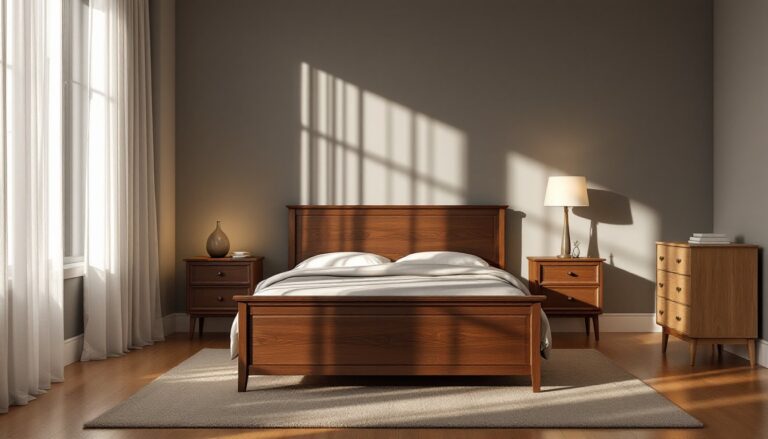
A bedroom with solid wood furniture doesn’t just look better, it holds up better, too. While particle board and laminate options might save money upfront, they rarely survive a single move without chipped edges and wobbly joints. Real wood furniture, by contrast, can last decades if properly maintained, making it both an investment and a daily comfort upgrade. Whether you’re furnishing a master suite or a kid’s room, understanding wood types, construction quality, and finish details helps you avoid buyer’s remorse and select pieces that age gracefully.
Table of Contents
ToggleKey Takeaways
- Solid wood bedroom furniture outlasts particle board and laminate alternatives by decades, with superior durability, repairability, and strong resale value on secondary markets.
- Hardwoods like oak, walnut, and maple offer the best balance of durability and workability, while softwoods like pine are budget-friendly but less suitable for high-traffic pieces.
- When selecting wood furniture pieces, prioritize corner blocks on bed frames, dovetail drawer joints, and proper back panel construction to ensure structural integrity and longevity.
- Wood bedroom furniture requires minimal maintenance—weekly dusting, humidity control between 30-50%, and UV protection—to keep finishes pristine and prevent warping or joint separation.
- Quality wood finishes such as water-based polyurethane and hardwax oil not only enhance indoor air quality by minimizing VOC emissions but also allow for refinishing when styles change.
Why Wood Furniture Remains the Best Choice for Bedrooms
Solid wood bedroom furniture outlasts nearly every alternative. A well-built oak dresser from the 1950s is still functional today, while particle board units from the early 2000s have long since disintegrated. The difference comes down to structural integrity and repairability.
Durability: Wood fibers compress under stress rather than crumbling. Mortise-and-tenon joinery or dovetails, common in quality wood furniture, create mechanical bonds that strengthen over time as the wood settles. Even when damage occurs, solid wood can be sanded, re-glued, or refinished. Try that with melamine.
Indoor Air Quality: Off-gassing from formaldehyde-based adhesives in engineered wood products can linger for months. Solid wood emits minimal VOCs, especially when finished with water-based polyurethane or natural oils. This matters in bedrooms, where people spend eight hours a night breathing recycled air.
Adaptability: Tastes change. A pine bed frame stained dark walnut in 2010 can be stripped and bleached for a Scandinavian look in 2026. Laminate furniture offers no such second chances. Plus, solid wood accepts repairs invisibly, fill a gouge with wood putty, sand smooth, apply matching stain, and the flaw disappears.
Resale Value: Quality wood furniture holds resale value on secondary markets. Check any estate sale or consignment shop: mid-century walnut dressers and cherry sleigh beds command premiums, while flat-pack MDF units get hauled to the curb.
Popular Wood Types for Bedroom Furniture and Their Characteristics
Not all wood is created equal. Species vary in hardness, grain pattern, and workability, which affects both price and performance.
Hardwoods: Oak, Walnut, and Maple
Oak (red and white varieties) is the workhorse of American furniture. Red oak shows prominent grain with pinkish undertones: white oak is slightly harder with a tighter grain and better moisture resistance. Both take stain well and resist dents. Expect to pay mid-range prices, $800–$2,000 for a solid oak dresser, depending on joinery and finish quality.
Walnut delivers rich chocolate-brown tones with minimal finishing required. It’s softer than oak but machines beautifully, making it a favorite for clean-lined modern pieces. Walnut’s natural color variation, from pale sapwood to deep heartwood, creates visual interest. Budget 15–30% more than oak for comparable pieces.
Maple (hard maple, specifically) is nearly as hard as oak but with a finer, more uniform grain. It’s often used in painted furniture because the tight grain doesn’t telegraph through finish coats. Natural maple has a light, creamy color that works in minimalist or Scandinavian schemes. Pricing sits between oak and walnut.
All three hardwoods handle daily use without showing wear. Drawer bottoms, bed slats, and other hidden components are often made from secondary hardwoods like poplar to reduce cost without sacrificing structural integrity.
Softwoods and Engineered Options: Pine, Cedar, and Plywood
Pine is affordable and widely available, making it popular for budget-conscious DIYers and cottage-style furniture. Eastern white pine is soft enough to dent with a fingernail, so it’s not ideal for high-traffic pieces like dressers. Knotty pine adds rustic charm but requires careful finishing, knots can bleed resin through paint or stain. A solid pine bed frame typically runs $300–$800, about half the cost of comparable oak.
Cedar (aromatic red cedar) naturally repels moths and insects, making it a smart choice for storage chests and closet linings. It’s lightweight and easy to work but too soft for structural applications like bed frames. The scent fades over time but can be refreshed with light sanding.
Plywood and other engineered products occupy a middle ground. Baltic birch plywood, for instance, uses hardwood veneers throughout (no softwood core), resulting in a stable, void-free panel ideal for modern platform bed builds. It’s dimensionally stable and less prone to warping than solid lumber, which makes it a favorite for drawer boxes and cabinet carcasses. Just ensure exposed edges are banded with solid wood or edge tape.
When evaluating engineered options, check for CARB Phase 2 compliance, this California Air Resources Board standard limits formaldehyde emissions. Most quality plywood and MDF sold in the U.S. meets this threshold, but import products sometimes don’t.
How to Select the Right Wood Furniture Pieces for Your Bedroom
Start with the bed frame, it’s the room’s anchor. A queen or king frame in solid hardwood will run $600–$2,500 depending on wood species, joinery method, and headboard complexity. Look for corner blocks (triangular braces where rails meet posts) and metal bed rail fasteners, not just screws driven into end grain. End grain holds screws poorly: corner blocks distribute weight and prevent racking.
Dressers and Nightstands: Open drawers fully and check for dovetail joints at the corners. Machine-cut dovetails are fine: they’re not as romantic as hand-cut, but they’re strong and consistent. Drawer bottoms should sit in dados (grooves) cut into the drawer sides, not just stapled in place. Solid wood drawer boxes glide smoother and hold up better than particle board, even with ball-bearing slides.
Inspect the back panel. Quality furniture uses plywood or shiplap boards screwed or nailed into a rabbet (a stepped recess) cut into the case sides. Cheap dressers use 1/8″ hardboard stapled flush to the back edges, which offers zero racking resistance. Push on the top corner of a dresser, if it shifts, the back is inadequate.
Finish Quality: Run your hand along edges and surfaces. A good finish feels smooth, with no tacky spots or rough grain. Water-based polyurethane is common on contemporary pieces: it dries clear and doesn’t yellow. Oil-based poly ambers over time, which complements traditional cherry or walnut but can make maple look dingy. For a more natural feel, hardwax oil finishes (like Rubio Monocoat or Osmo) penetrate the wood and require reapplication every few years but show off grain beautifully.
Room Layout and Scale: A king bed in a 10×12 room leaves no space for dressers. Measure your room and sketch a floor plan before shopping. Standard nightstand height is 24–28 inches, roughly level with mattress top. Dressers range from 30–40 inches tall: anything taller can overwhelm a room with 8-foot ceilings.
Consider multifunctional pieces if space is tight. Platform beds with built-in drawers eliminate the need for a separate dresser. For furniture selections that emphasize both style and function, look for designs with hidden storage or modular components.
If you’re buying unfinished furniture or building your own, beginner-friendly woodworking tutorials can walk you through sanding, staining, and topcoating. A random orbital sander, 120- and 220-grit paper, and a quality brush are the minimum tools. Work in a ventilated area and wear a respirator rated for organic vapors when applying solvent-based finishes.
Caring for and Maintaining Your Wood Bedroom Furniture
Wood furniture needs surprisingly little maintenance if finished properly. Dust weekly with a microfiber cloth, avoid feather dusters, which just redistribute particles. For sticky spots, use a damp (not wet) cloth and dry immediately. Water left standing on wood can cloud finishes or raise grain.
Polishing: Most modern finishes don’t require polish. In fact, silicone-based furniture polishes build up over time, creating a hazy film. If you must polish, use a product designed for your specific finish type. Oil finishes benefit from occasional reapplication of the same oil used originally. Polyurethane and lacquer finishes just need dusting.
Humidity Control: Wood expands and contracts with seasonal humidity changes. Keep bedroom humidity between 30–50% to minimize movement. In dry winter months, a humidifier prevents cracks and joint separation. In muggy summers, a dehumidifier or air conditioning keeps drawers from swelling shut. This is especially important for solid-wood panels in headboards and dresser tops, which can split if moisture content swings wildly.
Sunlight Protection: UV rays fade wood and break down finishes. Position furniture away from south-facing windows or use curtains during peak sunlight hours. Walnut and cherry are particularly prone to color shifts, cherry darkens to reddish-brown: walnut can bleach to tan if exposed long-term.
Scratch and Dent Repair: Minor scratches often disappear with a furniture touch-up marker matched to your wood’s stain color. Deeper gouges require wood filler. For natural or lightly stained finishes, colored wax fill sticks (like Mohawk or Minwax) work well. Press wax into the gouge, scrape flush with a plastic card, and buff. For painted finishes, touch-up paint and a fine artist’s brush handle small chips.
If a drawer sticks, don’t force it. Remove the drawer, inspect for obstructions, and rub a bar of soap or paraffin wax along the drawer slides. If wood has swollen, wait for lower humidity or plane a tiny amount off the drawer sides, 1/32 inch at a time with a hand plane. Overzealous planing leaves gaps when humidity drops again.
For more comprehensive furniture care strategies and comfortable living space tips, consider consulting region-specific guides that account for local climate conditions.
Refinishing becomes necessary when finishes wear through to bare wood or when you want a color change. Strip old finish with chemical stripper in a well-ventilated area, wearing nitrile gloves and safety glasses. Sand with progressively finer grits (80, 120, 180, 220), always moving with the grain. Apply stain if desired, then topcoat with three coats of polyurethane, sanding lightly between coats with 320-grit paper. The process is time-intensive but detailed project guides can simplify each step for DIYers tackling their first refinishing job.
Conclusion
Solid wood bedroom furniture isn’t just a purchase, it’s a decades-long relationship. Choose species and construction that match your lifestyle, maintain finishes with minimal fuss, and don’t hesitate to refinish when tastes change. Quality wood furniture adapts, repairs, and endures in ways that engineered substitutes simply can’t match.