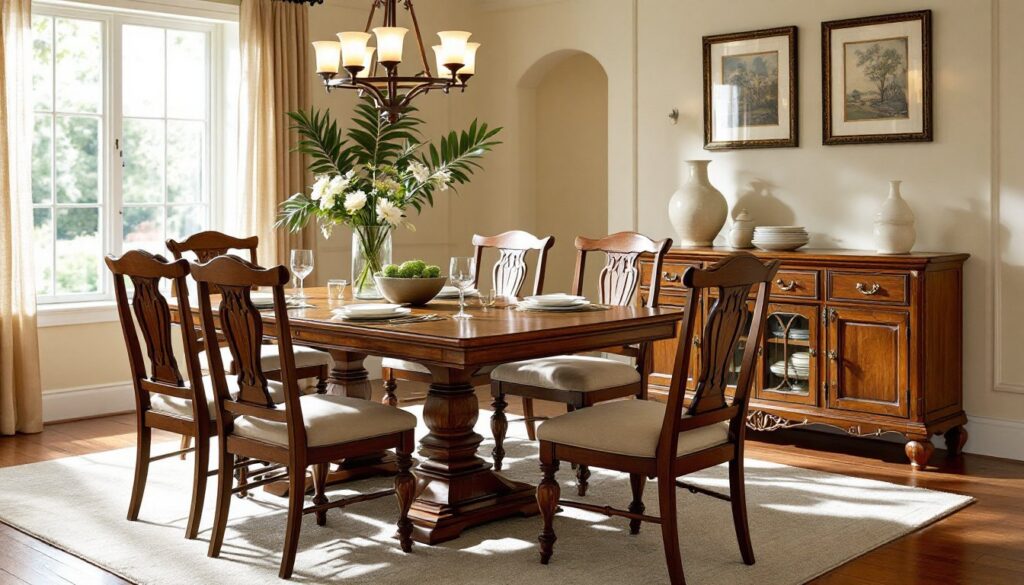
Hooker Furniture has been crafting dining room pieces since 1924, building a reputation for solid construction and designs that don’t fade with trends. If you’re furnishing a dining space and weighing quality against budget, Hooker sits in that middle-to-upper tier where you get hardwood frames, dovetail joinery, and finishes that hold up to daily use, not particleboard with a veneer that chips after two years. The brand offers everything from formal cherry pedestal tables to casual farmhouse trestle designs, so whether you’re hosting Thanksgiving or just need a sturdy place for Tuesday night tacos, there’s likely a set that fits. This guide walks through what sets Hooker apart, which collections match different styles, how to pick the right size for your room, and how to keep those pieces looking sharp for decades.
Table of Contents
ToggleKey Takeaways
- Hooker dining room furniture uses solid hardwood frames with dovetail joinery and multi-step factory finishes that resist water rings and fading, making it a durable mid-to-upper-tier option between budget imports and custom-made pieces.
- Popular collections like Tynecastle and Sanctuary suit formal dining, while American Life and Curata offer contemporary styles with clean lines and mixed materials for transitional homes.
- Calculate your maximum table footprint by subtracting 6 feet from both room dimensions, and choose between rectangular tables for capacity, round tables for conversation, or pedestal bases for flexible seating.
- Hooker dining sets require minimal daily maintenance—just a damp microfiber cloth—but proper care including coasters, trivets, and twice-yearly hardware tightening will keep pieces looking sharp for decades.
- Confirm table leaf extension mechanisms work smoothly before purchasing, verify chair seat height is 10–12 inches below the table apron, and allow 7 inches of clearance under the table for armchairs.
What Makes Hooker Dining Room Furniture Stand Out?
Hooker Furniture manufactures in Vietnam and China under U.S. design and quality control, which keeps costs below American-made hardwood furniture while maintaining better construction than mass-market imports. Here’s what you’re actually getting:
Solid hardwood frames are standard across most collections, no MDF cores or chipboard. Tables typically use rubberwood, oak, maple, or cherry for the base and legs, with veneers applied to large flat surfaces like tabletops to prevent warping (solid wood expands and contracts with humidity: veneer over plywood cores stays stable).
Dovetail drawer construction appears on most case pieces (buffets, sideboards, china cabinets). Dovetails are the interlocking finger joints you see at drawer corners, stronger than staples or glue, and a sign the manufacturer isn’t cutting corners.
Finish quality matters more than most DIYers realize. Hooker uses multi-step processes: stain, sealer coats, and a topcoat (often catalyzed lacquer or conversion varnish). This isn’t the single-coat stain-and-poly you’d do on a weekend project. The result resists water rings, scratches, and UV fading better than budget finishes.
Hardware and joinery include mortise-and-tenon joints on chair frames and tables, corner blocks with glue and screws (not just pocket holes), and metal-on-metal drawer glides rated for 75+ pounds. Chairs often feature reinforced stretchers and corner brackets.
You won’t find solid brass hardware or hand-rubbed oil finishes here, that’s the realm of custom shops and Amish builders. But for factory furniture, Hooker delivers joinery and materials that hold up to decades of use if you maintain them properly.
Popular Hooker Dining Room Collections and Styles
Traditional and Formal Dining Collections
Tynecastle and Sanctuary are the go-to lines for formal dining rooms. Tynecastle leans heavily into old-world European looks, carved aprons, turned legs, dark oak finishes with distressing. Tables run 72 to 108 inches with two 18-inch leaves, seating 8 to 12 comfortably. The buffets include felt-lined flatware drawers and adjustable shelving behind wood-framed glass doors.
Sanctuary offers a softer traditional style with lighter finishes (driftwood, vintage linen) and less carving. It’s still formal but works in transitional homes where heavy carved mahogany would look out of place. The upholstered chairs use linen-blend fabrics treated with stain resistance, practical for homes with kids or pets.
Both collections include china cabinets with interior lighting and tempered glass shelves rated for 25 pounds each. If you’re storing heirloom china, check the adjustable shelf spacing: some cabinets have fixed shelves that won’t accommodate oversized platters.
Contemporary and Transitional Options
For modern and transitional spaces, the American Life and Curata collections offer cleaner lines and mixed materials. American Life blends rustic oak with metal accents, think trestle tables with wrought-iron stretchers and chairs with X-back designs. Tables start at 60 inches and extend to 96 inches, which fits most open-plan dining areas without overwhelming the room.
Curata takes a more urban approach: straight-lined cases, brushed stainless or antique brass hardware, and high-contrast finishes like midnight paired with champagne. The dining tables feature thick tops (usually 2-inch profiles) with waterfall edges or beveled details. These designs complement contemporary furniture trends emphasizing minimalism and industrial touches.
If you’re mixing metals in your home (say, brushed nickel kitchen faucets and oil-rubbed bronze door hardware), Curata’s hardware comes in multiple finishes within the same collection, so you can match existing fixtures.
Choosing the Right Hooker Dining Set for Your Space
Start with room dimensions, not table size. Measure your dining area and subtract 6 feet from both length and width, that’s your maximum table footprint with chairs pulled out. A 10×12-foot room can fit a 48×72-inch table: anything larger and you’re bumping walls when someone stands up.
Table shape affects flow. Rectangular tables seat more people but require longer rooms. Round and oval tables work better in square spaces and encourage conversation, but they max out around 8 seats (a 60-inch round fits 6 comfortably, 8 snugly). Pedestal bases, single center support instead of four corner legs, give you more flexible seating since you’re not dodging table legs.
For leaf extensions, confirm the mechanism. Hooker uses two main types:
- Self-storing leaves live under the table in a dedicated compartment. Convenient, but they add weight and reduce knee clearance.
- Removable leaves store separately (in a closet, usually). Lighter table, but you need to remember where you put them before Thanksgiving.
Test the extension action in person if possible. Smooth slides with minimal wobble indicate quality hardware. Cheap mechanisms bind or leave gaps between leaves.
Chair comfort is subjective, but check these details:
- Seat height should be 10 to 12 inches below the table apron (the horizontal frame under the tabletop). Measure if you’re pairing chairs and table from different collections.
- Arm chairs need 7 inches of clearance to slide under the table. If your table has a thick apron or lower stretchers, armless side chairs are safer.
- Upholstered seats beat solid wood for comfort, but they’re harder to clean. Hooker’s treated fabrics handle spills better than untreated linen, but you’ll still want to keep a fabric cleaner on hand.
Many furniture retailers allow you to mix and match within a collection, buy the table you love with different chairs if the originals don’t fit your space or budget.
Caring for Your Hooker Dining Room Furniture
Good construction buys you decades of use, but only if you maintain the finish and hardware. Here’s the reality of wood furniture care, not the Pinterest version.
Daily cleaning: Use a microfiber cloth, barely damp with water. That’s it. No vinegar, no lemon oil, no Pledge. Spray cleaners leave residue that dulls the finish and attracts dust. For sticky spots, add one drop of dish soap to a quart of water, wipe, then dry immediately.
Avoid water damage: Use coasters, trivets, and placemats every single time. Water rings happen when moisture sits on the finish for 10+ minutes. If you do get a white haze (water trapped under the topcoat, not in the wood), rub gently with a paste of baking soda and non-gel toothpaste, then wipe clean. This works on catalyzed finishes: if the piece has an oil or wax finish, you’ll need to re-oil or wax the spot.
Sunlight fading: Direct sun will change wood color over time, cherry darkens to a deep red, maple yellows, walnut lightens. Rotate decorative items every few months so you don’t end up with lighter squares where a vase sat for two years. Consider interior design approaches that use UV-filtering window treatments in rooms with south- or west-facing windows.
Hardware maintenance: Tighten screws on chair legs and hinges twice a year. Chairs take lateral stress every time someone sits or stands, loose screws lead to wobbly joints, which stress glue lines and eventually crack. Check drawer pulls: if they’re loose, remove the screw, dab in a drop of threadlocker (blue Loctite), and retighten.
Refinishing scratches: Minor scratches often blend in with a furniture marker or stain pen matched to the finish. Deep gouges that reach bare wood need sanding, stain, and topcoat, feasible for a DIYer with a finish sprayer, but most people take those pieces to a refinisher. Budget $150 to $300 per piece for professional touch-ups.
If you’re comparing furniture care requirements, Hooker’s factory finishes are tougher than what most local furniture stores apply in-house. But they’re not indestructible. Treat the surface like it costs what it did, and you’ll hand it down to your kids.
Conclusion
Hooker dining room furniture sits in that practical sweet spot, better construction and materials than big-box brands, but priced below custom or American-made hardwood. The joinery, finishes, and hardware will serve you well if you match the style to your space and keep up with basic maintenance. Measure twice before you buy, test the extension mechanism, and don’t skip coasters. Your dining room gets heavy use: invest in pieces that can take it.