Shopping for patio furniture shouldn’t mean choosing between style and sustainability. The good news? More manufacturers are producing durable, attractive outdoor furniture from reclaimed materials, recycled plastics, and responsibly harvested wood. Whether someone’s furnishing a compact balcony or a sprawling backyard deck, eco-friendly options now match or exceed the longevity and comfort of conventional pieces, without the environmental guilt. This guide walks through what actually makes outdoor furniture sustainable, which materials hold up best, and how to select and maintain pieces that’ll weather seasons without ending up in a landfill.
Table of Contents
ToggleKey Takeaways
- Eco-friendly patio furniture meets three core criteria: sustainable sourcing, low-impact manufacturing, and end-of-life recyclability or biodegradability—look for third-party certifications like FSC or Cradle to Cradle to verify genuine environmental claims.
- Reclaimed wood, bamboo, recycled HDPE plastic, and recycled metal are top sustainable material choices that deliver durability comparable to conventional furniture while reducing environmental impact.
- Matching materials to your space’s exposure level—full sun, covered, or coastal—ensures eco-friendly patio furniture performs reliably and requires appropriate maintenance for a longer lifespan.
- Proper maintenance like monthly cleaning, seasonal sealing, and minor repairs can double or triple the lifespan of outdoor furniture, making it the most sustainable outcome of all.
- Buying secondhand and choosing modular, disassemblable designs extends furniture life and eliminates manufacturing impact, turning eco-friendly patio furniture into a truly circular investment.
What Makes Patio Furniture Eco Friendly?
Eco-friendly patio furniture meets three core criteria: sustainable sourcing, low-impact manufacturing, and end-of-life recyclability or biodegradability. Not every “green” claim holds up under scrutiny, so it’s worth knowing what to look for.
Sustainable sourcing means materials come from renewable or reclaimed sources. That includes FSC-certified wood (harvested from responsibly managed forests), bamboo (which regenerates rapidly without replanting), reclaimed lumber, or post-consumer recycled content like HDPE plastic salvaged from milk jugs.
Low-impact manufacturing reduces energy consumption, water use, and chemical treatments during production. Furniture finished with water-based stains or natural oils instead of solvent-heavy varnishes falls into this category. Local or domestic manufacturing also cuts transportation emissions compared to imports shipped halfway around the globe.
End-of-life considerations matter more than most people realize. Can the piece be disassembled and recycled, or will it sit in a landfill for decades? Mono-material designs, like all-metal or all-plastic construction, simplify recycling. Biodegradable materials such as untreated wood or natural fiber cushions break down without leaving microplastics behind.
Third-party certifications help cut through marketing jargon. Look for labels like FSC, Cradle to Cradle, GreenGuard, or Global Organic Textile Standard (GOTS) for cushion fabrics. These verify that products meet measurable environmental and safety standards, not just vague “eco-conscious” promises.
Best Sustainable Materials for Outdoor Furniture
Choosing the right material determines how long furniture lasts, how much maintenance it requires, and what happens when it eventually wears out. Here’s what actually works outdoors.
Reclaimed Wood and Bamboo
Reclaimed wood salvaged from old barns, warehouses, or deconstructed structures brings character and keeps usable lumber out of landfills. Common species include Douglas fir, oak, and pine. Because this wood has already weathered decades of expansion and contraction, it’s often more stable than fresh-cut lumber. Expect some surface imperfections, nail holes, saw marks, or color variation, which many people consider part of the appeal.
Bamboo technically isn’t wood: it’s a fast-growing grass that reaches harvest maturity in 3-5 years compared to 20-50 years for hardwoods. Strand-woven bamboo (compressed under heat and pressure) rivals the density and weather resistance of teak. It works well for chair frames, tabletops, and planter stands. The catch: bamboo needs a water-resistant finish to prevent swelling and cracking in humid climates. Reapply a penetrating oil or exterior-grade polyurethane every 1-2 seasons.
FSC-certified teak and eucalyptus also qualify as sustainable if sourced from managed plantations. Both contain natural oils that repel moisture and resist rot, making them low-maintenance options. Teak weathers to a silver-gray patina unless treated annually with teak oil. Eucalyptus costs less but requires more frequent sealing, plan on refinishing every 12-18 months in full sun.
Recycled Plastic and Metal
High-density polyethylene (HDPE) recycled from post-consumer waste, milk jugs, detergent bottles, grocery bags, gets reformed into weather-proof lumber that mimics wood grain without the upkeep. Companies like recycled plastic furniture makers produce chairs and benches that won’t splinter, rot, or fade. HDPE doesn’t absorb moisture, so it won’t warp or host mold. Clean it with soap and water: no sanding, staining, or sealing required.
The downside? HDPE softens in extreme heat and can sag under heavy loads if not properly supported. Check for reinforced frames (metal inserts or thicker wall sections) on chairs and benches rated for adult weight. Color options have improved, but expect a slightly plastic appearance compared to natural materials.
Recycled aluminum and steel offer strength and recyclability. Aluminum resists rust without coatings, making it ideal for coastal areas. Steel requires a powder-coated or galvanized finish to prevent corrosion: inspect welds and joints annually for chips that expose bare metal. Both metals conduct heat, so they’ll be hot to the touch in direct sun, pair them with cushions or choose slatted designs that allow airflow.
Recycled metal frames paired with reclaimed wood or HDPE slats combine durability with a lighter environmental footprint than virgin materials. Look for products listing the percentage of recycled content (aim for 70% or higher) rather than vague “contains recycled materials” claims.
How to Choose the Right Eco Friendly Patio Furniture for Your Space
Measure first, shop second. A bistro set that looks cozy in a showroom can overwhelm a 6×8-foot balcony or get lost on a 400-square-foot deck.
Start with dimensions. Measure the usable space, not just the total square footage. Account for door swings, grill clearance, and walkways (allow at least 24-30 inches behind chairs for people to push back and stand). Sketch a rough layout or use painter’s tape to outline furniture footprints on the ground before buying.
Match material to exposure. Full-sun spaces demand UV-resistant materials. HDPE and powder-coated metal handle intense sun without fading or degrading. Wood and bamboo need regular finishing to prevent cracking. For covered patios, natural fiber cushions and untreated wood hold up fine with occasional care.
Coastal areas require corrosion-resistant materials: aluminum, marine-grade stainless steel, or sealed teak. Avoid untreated steel or low-quality powder coating, which will rust within a season.
Consider modularity. Modular sectionals and stackable chairs adapt as needs change. They’re easier to store during off-season or rearrange for gatherings. Many sustainable brands design pieces to be disassembled with basic tools, so damaged components can be replaced without scrapping the entire set.
Evaluate cushion fabric. Look for solution-dyed acrylic (brands like Sunbrella) made from recycled content. The pigment saturates the fiber during production, so color won’t fade or wash out. Water-resistant doesn’t mean waterproof, bring cushions inside during heavy rain or store them in a deck box. Natural alternatives include organic cotton or hemp canvas treated with beeswax or plant-based water repellents, though they require more frequent reproofing.
Check weight ratings. Lightweight eco-friendly materials sometimes sacrifice load capacity. Confirm that chairs support at least 250 pounds and benches handle the cumulative weight of expected users. Reinforced joints and cross-bracing add stability without excess material.
Buying secondhand extends the life of existing furniture and eliminates manufacturing impact entirely. Inspect frames for cracks, rust, or wobbly joints. Refinishing wood or repainting metal is straightforward DIY work, strip old finishes with a citrus-based remover, sand smooth, and apply exterior-grade stain or paint. Replace cushions with new eco-friendly fabric and foam.
Caring for Your Sustainable Outdoor Furniture
Proper maintenance doubles or triples the lifespan of outdoor furniture, which is the most sustainable outcome of all.
Wood and bamboo: Clean with mild soap and water monthly during active use. For teak, let it weather naturally or maintain the original honey tone with annual teak oil application. Eucalyptus and bamboo need exterior wood sealer every 12-18 months, use a penetrating oil or water-based polyurethane rated for UV exposure. Sand lightly (120-grit) between coats to remove surface grime and open the grain. Store cushions and covers indoors during winter to prevent mold and UV damage.
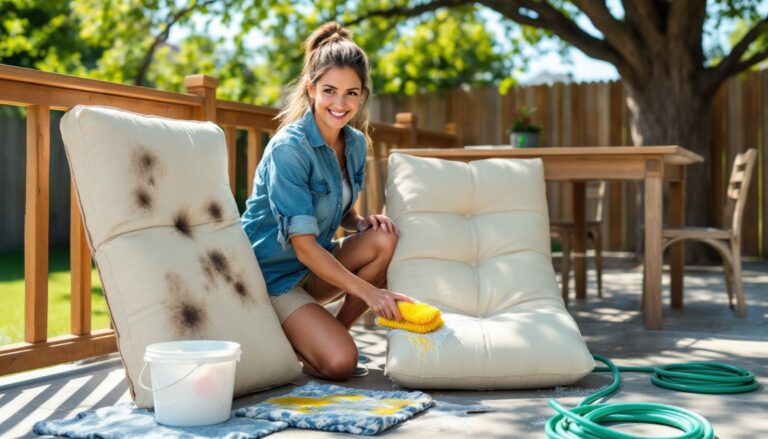
HDPE plastic: Hose off dirt and pollen weekly. For stubborn stains, scrub with a soft brush and oxygen bleach (not chlorine bleach, which can discolor plastic). Skip pressure washers: they can pit or roughen the surface. HDPE doesn’t need sealing, but keeping it clean prevents algae buildup in humid climates.
Metal: Wipe down powder-coated aluminum or steel monthly with soapy water. Inspect for chips or scratches: touch up bare spots immediately with matching spray paint to prevent rust. For raw aluminum, use a metal polish once or twice per season to maintain luster. Stainless steel (especially in salt air) benefits from occasional wipe-downs with white vinegar to remove salt deposits.
Cushions and fabric: Vacuum weekly to remove pollen and dirt that can abrade fibers. Spot-clean spills promptly with mild detergent. Most solution-dyed acrylic fabrics are machine-washable on gentle cycle: air dry to prevent shrinkage. Natural fabrics need reproofing with water-repellent spray annually. Store cushions in a ventilated bin or shed during winter, plastic bags trap moisture and encourage mildew.
Off-season storage: If space allows, move furniture into a garage or shed. Otherwise, invest in breathable covers (avoid non-breathable vinyl, which traps condensation). Elevate pieces on blocks to prevent ground contact and water wicking. Stack chairs to save space, but place towels or foam between frames to prevent scratches.
Minor repairs extend usable life significantly. Tighten loose bolts annually with a socket wrench. Replace worn cushion covers instead of entire cushions. Sand and refinish wood every few seasons rather than waiting for severe weathering. These small interventions prevent the landfill trip and keep sustainable materials in service longer.
Conclusion
Eco-friendly patio furniture isn’t a compromise, it’s a smarter investment. Materials like reclaimed wood, bamboo, HDPE, and recycled metal deliver durability and style while reducing environmental impact. Choosing pieces suited to the space and climate, then maintaining them properly, ensures they’ll serve for decades rather than seasons. The result is an outdoor space that’s comfortable, functional, and built to last without filling a landfill.